


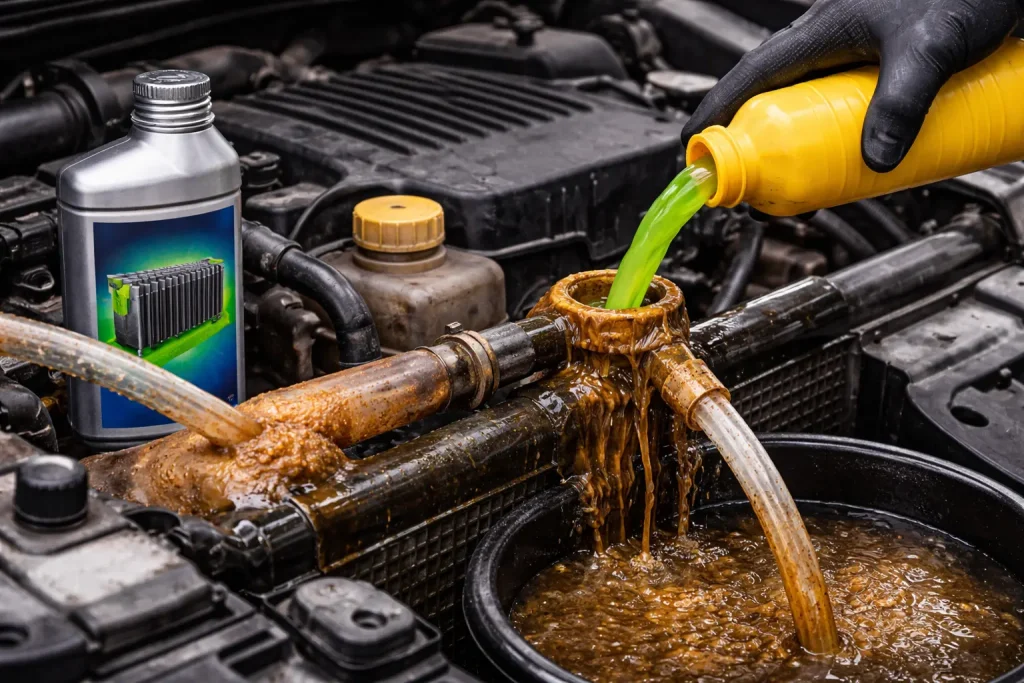
If your radiators feel hot at the top but cold at the bottom, there is a good chance that sludge is the problem. It builds slowly and quietly, yet it can reduce heat, increase bills, and put strain on your boiler.
In this guide, we explain what radiator sludge is, how to get rid of sludge in a radiator, and when a professional radiator flush is the right choice. We keep everything clear and practical so you can take action with confidence.
What Is Radiator Sludge?
Radiator sludge is a thick, dark mixture that forms inside your heating system over time. It is made from rust, dirt, and debris that circulate through your pipes and settle at the bottom of the radiators.
This build-up blocks the flow of hot water. As a result, your system works harder to heat your home.
Why Sludge in a Radiator Matters
Ignoring sludge can lead to several problems:
- Rooms take longer to heat
- Cold spots on radiators
- Higher energy bills
- Noisy boiler or pipes
- Increased risk of breakdowns
We often see this during routine visits like a boiler service, where poor system performance is linked to internal build-up.
Common Signs You Have Sludge
You do not need specialist tools to spot the issue. Look out for:
- Radiators cold at the bottom
- Dirty water when bleeding radiators
- Heating takes longer than usual
- Some radiators not heating at all
- Strange noises from your boiler
If more than one radiator shows these signs, the problem is likely across the whole system.
How to Clean Radiator Sludge (Step-by-step)
If the issue is limited to one radiator, you can try a simple DIY clean. Here is how to clean sludge from a radiator safely.
- Turn Off the Heating
Always switch off your system and let it cool fully before starting.
- Protect the Area
Place towels or a tray under the radiator to catch dirty water.
- Remove the Radiator
Close both valves and carefully disconnect the radiator from the wall.
- Flush with Clean Water
Take it outside and run a hose through it until the water runs clear. This helps remove sludge from the radiator.
- Reinstall and Test
Reconnect everything, refill the system, and bleed the radiator.
This method works well for small issues. However, it does not clean the entire system.
When You Need a Professional Radiator Flush
If sludge is present across multiple radiators, a full radiator flush is the best solution.
A professional flush cleans:
- All radiators
- Pipework
- The boiler
We use specialist equipment to push water and clean chemicals through the system at high speed. This removes stubborn sludge and restores proper circulation.
If your heating system is struggling, it is worth consulting a heating engineer for a full assessment.
Radiator Sludge Remover vs Power Flush
Here is a simple comparison to help you decide:
| Method | Best For | Result |
| DIY cleaning | One radiator | Partial improvement |
| Chemical radiator sludge remover | Mild build-up | Helps loosen debris |
| Full power flush | Whole system | Complete deep clean |
A radiator sludge remover product can help in the early stages, but it will not match the results of a professional flush.
Real Example: What We Often See
A homeowner recently contacted us because their living room never warmed up properly. The radiator felt hot on top but cold below.
We checked the system and found heavy sludge build-up. After a full radiator flush, the difference was immediate. The heat spread evenly, and the boiler ran quietly.
This is a common situation and shows how effective proper cleaning can be.
How to Prevent Sludge from Coming Back
Once your system is clean, it is important to keep it that way.
We recommend:
- Adding a corrosion inhibitor
- Installing a magnetic filter
- Booking regular servicing
- Flushing the system every few years
Common Mistakes to Avoid
Many homeowners try quick fixes that do not solve the root problem. Avoid these:
- Only bleeding radiators when sludge is present
- Ignoring repeated cold spots
- Using chemicals without proper flushing
- Delaying professional help when multiple radiators are affected
This can waste time and lead to bigger repair costs later.
Final Thoughts
Radiator sludge is a common issue, but it is also one of the easiest to fix when handled properly. Clean radiators heat faster, use less energy, and last longer.
At All Plumbing Services, we help homeowners restore efficient heating with expert cleaning, repairs, and maintenance. Whether you need a quick check or a full system flush, our team is ready to help. If your heating is not performing as it should, get in touch today for straightforward advice and reliable service.