


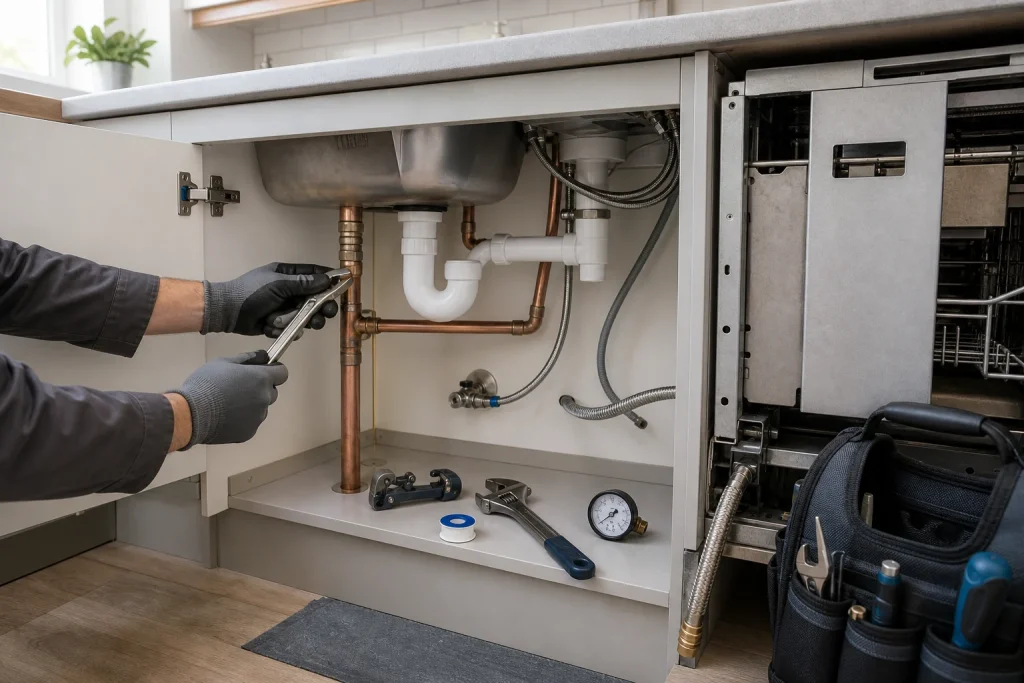
A dishwasher looks simple once it is pushed neatly under the worktop. Behind it, though, the connection depends on the right water feed, waste route, valve access and leak protection.
Good installation is not just about making the appliance run on day one. It is about making sure it can fill, drain, isolate and sit safely in a busy kitchen without causing hidden damage later.
Why the pipework matters before the appliance goes in
Dishwashers need a reliable cold water supply and a waste connection that can handle regular discharge. In many kitchens, the appliance sits close to a sink, so the connection may share pipework under the basin. That can work well, but only if the existing layout is suitable and in good condition.
A plumber will usually look at the available space, the route of the hoses, the condition of the valves and whether the waste trap has the correct appliance connection. They will also check that hoses are not likely to be crushed when the dishwasher is moved into position.
This matters because tight cupboards, older fittings and improvised pipe runs can all create problems. A hose with a sharp bend may restrict flow. A poor waste connection may smell, leak or allow dirty water to sit where it should not. A valve that is hidden behind the appliance may make future servicing harder than it needs to be.
For homes where the pipework is being altered or a new appliance position is being created, professional appliance installation plumbing helps ensure the connection is planned properly rather than squeezed into whatever happens to be there.
Water supply checks for a dishwasher connection
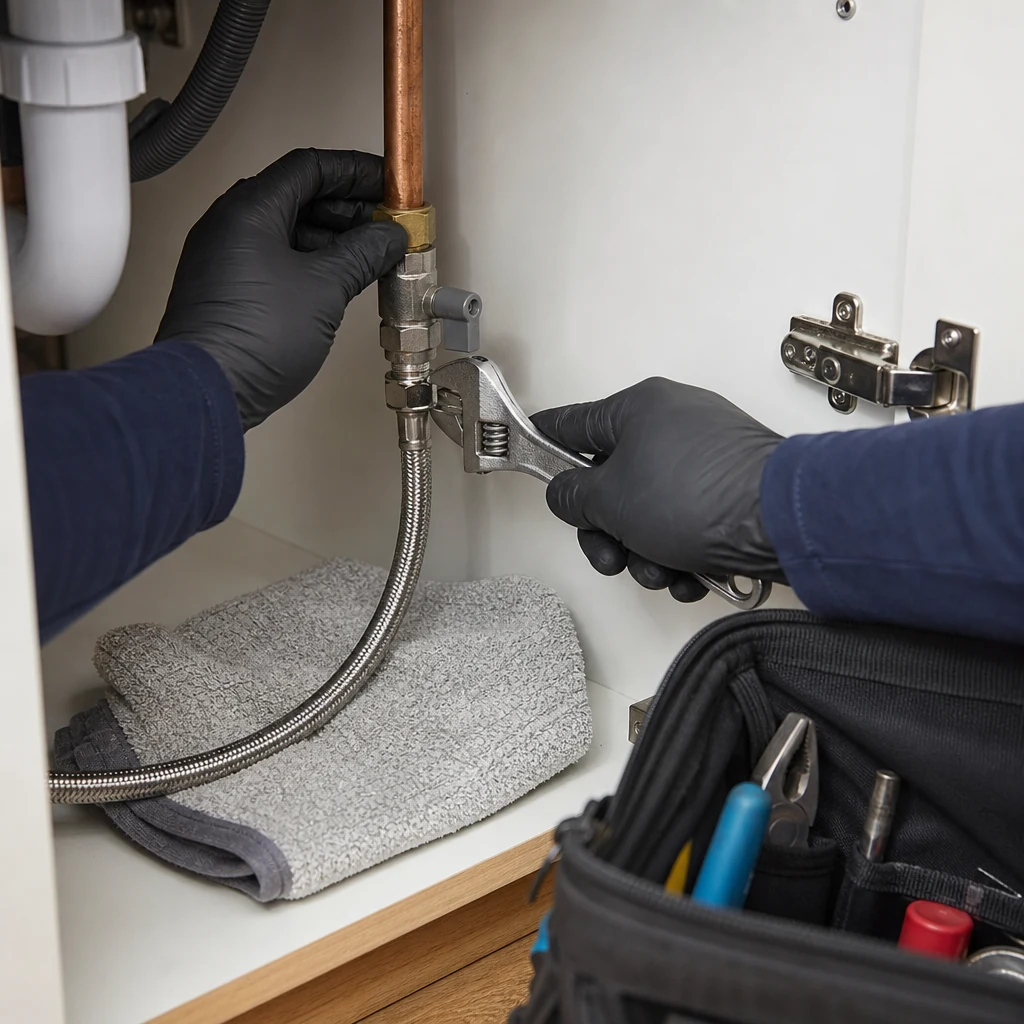
Most domestic dishwashers are connected to the cold water supply. The installer needs to confirm that the feed is suitable, accessible and controlled by the right valve. This is not only about whether water comes out of the pipe. It is about whether the supply can be isolated safely and whether the fittings are appropriate for the appliance.
Common checks include the condition of the existing pipework, the type of connector, the thread on the appliance hose, and whether there is enough room for the hose to sit without strain. Copper, plastic and flexible connections can all appear in domestic kitchens, but the final arrangement needs to be secure, supported where necessary and compatible with the appliance manufacturer’s instructions.
Water pressure can also affect how an appliance behaves. If pressure is unusually low, the dishwasher may fill slowly or show an error. If pressure is high or fittings are worn, weak connections are more likely to reveal themselves. Where pressure issues are suspected, it can be useful to understand the wider signs covered in this guide to common causes of low water pressure.
A good installation keeps the supply neat and serviceable. The aim is not to add unnecessary pipework, but to make the connection dependable and easy to manage if the appliance ever needs to be moved, replaced or inspected.
The role of isolation valves
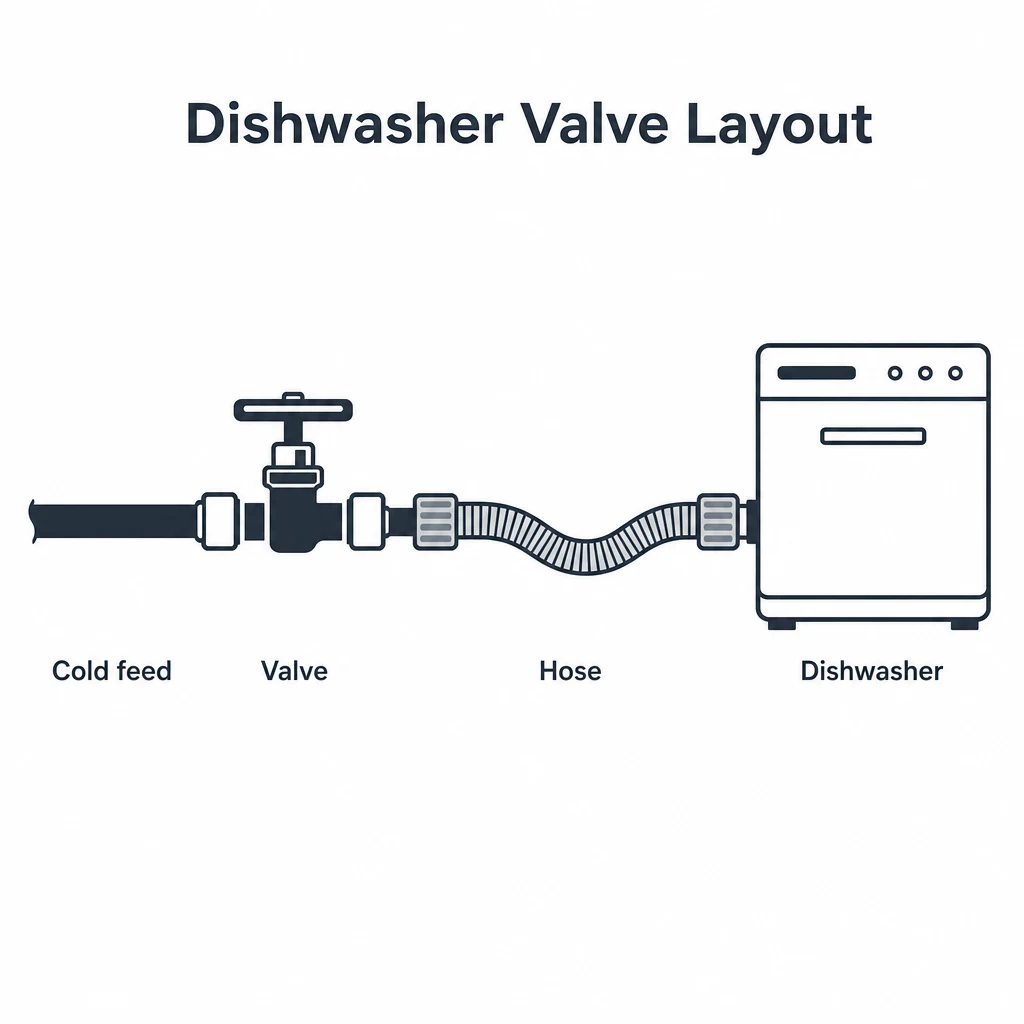
An isolation valve allows the water supply to the dishwasher to be turned off without shutting down the whole property. It is a small fitting, but it is one of the most important parts of a sensible installation.
If a dishwasher hose fails, a valve starts weeping, or the appliance needs replacing, a reachable isolation valve makes the situation far easier to control. Without one, a minor problem can become more disruptive because the wider water supply may need to be stopped while the issue is investigated.
Accessibility is just as important as the valve itself. A valve tucked behind the appliance may technically exist, but it is not much help if the dishwasher has to be dragged out before anyone can reach it. Where possible, the valve should be placed where it can be found and operated safely, often within the adjacent cupboard.
The quality and condition of the valve also matter. Older valves can seize, leak from the spindle or fail to shut off properly. During an installation, a plumber may recommend replacing a tired valve so the new appliance is not relying on a weak point that was already there.
Waste connections and drainage problems
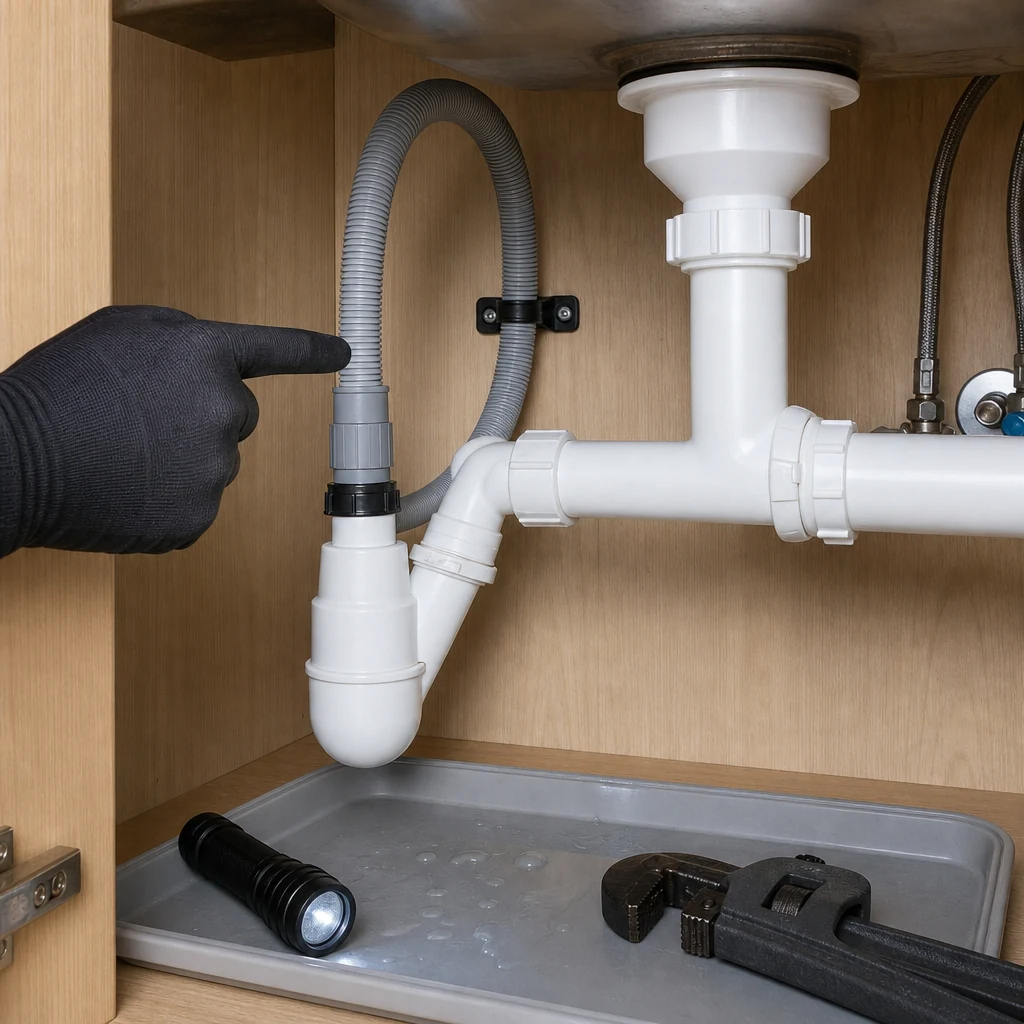
Once the dishwasher has finished washing, it has to pump wastewater away cleanly. In many kitchens, the waste hose connects to a spigot on the sink trap or to dedicated waste pipework. The connection must be secure, correctly positioned and free from restrictions.
A poor waste arrangement can cause several problems. Water may drain slowly, smells may come back through the pipework, or waste from the sink may find its way towards the appliance hose. If the blanking cap on a new trap connection is not removed, the dishwasher may be unable to drain at all.
The route of the waste hose is important too. It should not be crushed behind the appliance, stretched tightly across a cupboard or left hanging where it can be knocked. The installer will also consider how the hose sits in relation to the trap, because poor positioning can encourage backflow or leave water sitting where it should not.
Waste connections are one of the reasons dishwasher installation is best treated as a plumbing job, not just an appliance delivery task. The dishwasher, sink, trap and pipework all need to work together.
Leak prevention and final testing
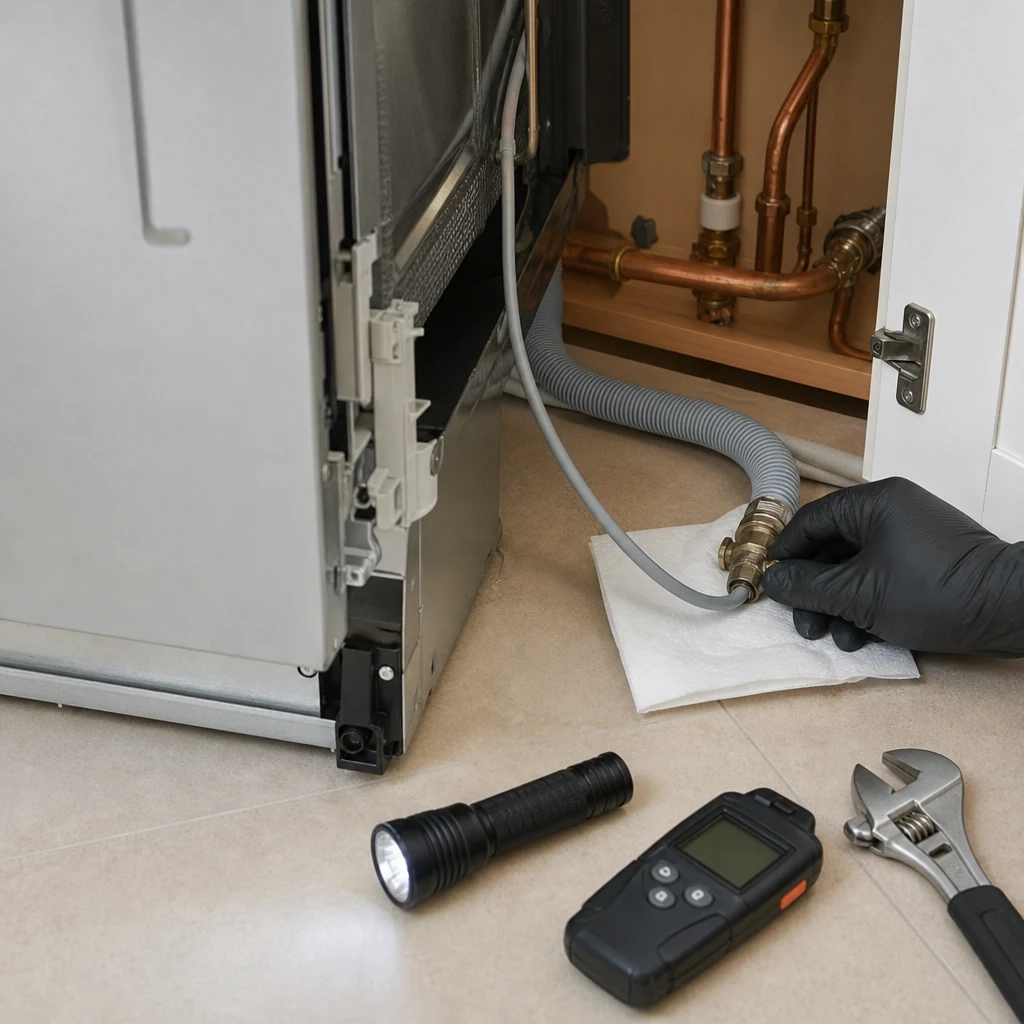
Leaks around dishwasher connections are often small at first. A slight weep under a sink or behind an appliance can go unnoticed until it marks a cabinet, damages flooring or creates a musty smell. That is why final testing is a key part of the job.
After connection, the water supply should be turned on carefully and the joints checked under pressure. The appliance should then be run through enough of a cycle to confirm that it fills and drains as expected. The waste connection, valve, hose ends and nearby pipework should all be inspected while the dishwasher is operating.
It is also sensible to check the appliance is level and stable. A dishwasher that rocks, traps its hoses or sits awkwardly against pipework can create strain over time. The plumbing may be correct in principle, but the final position still matters.
Small leaks are easy to underestimate because they do not always look urgent. The damage can build quietly, especially inside kitchen units. For a broader look at why minor leaks deserve attention, see this guide to the hidden cost of small leaks.
When to involve a plumber
If the existing kitchen already has a sound valve, a suitable waste point and clear access, a dishwasher connection may be straightforward for a qualified installer. However, many homes are not quite that simple. The pipework may be old, the trap may be unsuitable, the valve may be seized, or the appliance may be moving to a new position.
A plumber is particularly useful when pipework needs altering, a valve needs adding, a waste connection needs upgrading, or there are signs of previous leaks under the sink. They can also spot practical issues before the appliance is pushed into place, such as hoses running too close to sharp edges or connections that will be impossible to reach later.
This is not about making the job more complicated than it needs to be. It is about making sure a water-using appliance is connected in a way that protects the kitchen, supports the appliance and gives you a clear shut-off point if something ever needs attention.
- Dishwashers need a suitable cold water feed, secure waste connection and accessible isolation valve.
- The condition and position of existing pipework matter as much as the appliance hose itself.
- A reachable isolation valve makes future servicing, replacement and emergency shut-off much easier.
- Final testing should check filling, draining and all visible joints under working conditions.
- Small leaks behind appliances or inside cupboards can cause damage before they are noticed.
Frequently asked questions
Does a dishwasher need its own isolation valve?
It is strongly recommended. A dedicated isolation valve means the appliance water supply can be turned off without shutting down the whole home, which is useful for servicing, replacement or dealing with a leak.
Can a dishwasher share the sink waste connection?
Often, yes, if the trap has a suitable appliance connection and the hose can be routed correctly. The connection still needs to be secure, unobstructed and positioned to reduce the risk of smells, leaks or backflow.
Why is there water under the sink after a dishwasher is installed?
Possible causes include a loose hose connection, a worn valve, a poor waste joint, trapped hose or an existing leak disturbed during installation. The appliance should be turned off and the area checked promptly.
Should pipework be checked before replacing an old dishwasher?
Yes. Replacing the appliance is a good opportunity to check the valve, hose route, waste connection and surrounding pipework. Older fittings may still work, but they may not be the best basis for a new installation.
Need a dishwasher connected properly?
All Plumbing Services can check the pipework, valves and waste connection so your appliance is installed neatly and safely.