


Low water pressure can turn everyday tasks into a slow and frustrating routine. A weak shower, taps that take ages to fill a sink, or appliances that struggle to run properly are all signs that something is not right. In this guide, we explain how to increase water pressure in your house with simple checks, practical fixes, and when to call a professional.
We will walk you through the causes, how to test your pressure, and the best ways to improve it at home.
What Is Water Pressure (And Why It Matters)
Water pressure is the force that pushes water through your pipes. In most UK homes, it is measured in bars, and typically sits between 1 and 3.5 bars.
If the pressure drops too low, water flow becomes weak. If it is too high, it can damage pipes and appliances. Getting the balance right is essential for comfort and safety.
Why Low Water Pressure Happens
Understanding the causes of low water pressure helps you fix the issue faster. In many homes, the problem is not just one thing but a mix of small issues.
Common reasons include:
- Partially closed stop valves
- Build-up of limescale in pipes or taps
- Leaks in your plumbing system
- Old or narrow pipework
- High water demand during peak hours
- Faulty fixtures like taps or showers
Sometimes the issue affects only one tap. Other times, the whole house experiences low pressure.
How to Check Water Pressure at Home
Before fixing anything, it helps to measure your water pressure properly.
Simple ways to test it:
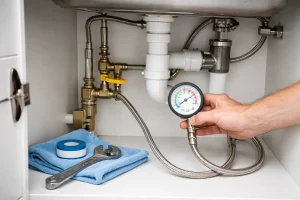
- Use a pressure gauge
Attach it to an outdoor tap and turn the water on fully. - Jug test (quick method)
Fill a 1-litre jug from your tap.
- Under 6 seconds = good pressure
- Over 6 seconds = likely low pressure
If your readings are consistently low, it confirms you need to take action.
How to Fix Low Water Pressure (Step-by-Step)
Here are practical ways to fix low water pressure without overcomplicating things.
1. Check Your Stop Tap
Your internal stop tap is usually under the kitchen sink. If it is not fully open, it restricts water flow.
Turn it fully open, then turn it slightly back to avoid stiffness later.
2. Clean Taps and Showerheads
Limescale build-up is very common in UK homes. It blocks water flow and reduces pressure.
Soak the tap head or showerhead in vinegar for a few hours and rinse thoroughly.
This simple fix can instantly improve your shower water pressure.
3. Look for Hidden Leaks
Leaks reduce pressure across your home.
Try this:
- Turn off all the water
- Check your water meter
- Wait for an hour
- Check it again
4. Check for Faulty Fixtures
If only one tap or shower is affected, the issue is likely local.
Replacing washers, cartridges, or fittings can restore pressure quickly.
For bathroom-specific issues, working with experienced bathroom fitters can make a noticeable difference.
5. Upgrade Old Pipework
Older homes often have narrow or corroded pipes that restrict flow.
Modern pipe materials improve both flow and durability. If your system is outdated, upgrading it can significantly increase water pressure at home.
6. Install a Water Pressure Booster Pump
If your mains supply is weak, a water pressure booster pump can help.
This is one of the most effective solutions for whole-house pressure issues.
It works by increasing the flow from your main supply, resulting in higher pressure across taps, showers, and appliances.
7. Consider Your Heating System
Your boiler type can affect pressure, especially for hot water.
If you notice pressure drops when using hot water, it may be worth checking your system with a heating engineer or booking a boiler service.
Real-Life Example
One homeowner noticed their shower pressure dropped every morning. The issue turned out to be high demand in the area during peak hours, combined with a partially closed stop valve.
After opening the valve fully and installing a small booster pump, the pressure improved instantly.
Another case involved a blocked showerhead. A simple clean restored full pressure without any major work.
Common Mistakes to Avoid
Many people try quick fixes without understanding the root cause.
Here are mistakes we often see:
- Ignoring small leaks
- Replacing taps without checking pipework
- Installing the wrong pump size
- Overlooking limescale build-up
- Not checking the mains supply first
Avoiding these saves both time and money.
Best Solutions Compared
| Solution | Best For | Effort Level |
| Cleaning fixtures | Minor issues | Low |
| Opening valves | Whole house low pressure | Low |
| Fixing leaks | Pressure drops + water waste | Medium |
| Pipe upgrades | Old homes | High |
| Booster pump | Consistently low pressure | Medium |
Final Thoughts
Dealing with water pressure problems and solutions does not have to be complicated. In many cases, small adjustments can make a big difference. The key is to identify the cause early and choose the right fix.
If your pressure remains low despite trying these steps, it is best to get expert advice.
At All Plumbing Services, we help homeowners across Berkshire diagnose and fix pressure issues properly. Whether it is a hidden leak, a faulty system, or a full upgrade, we provide clear advice and reliable solutions. From general plumbing to toilet repairs and heating support, our team is here to help.
If you are struggling with low pressure or want a proper inspection, get in touch with us today. We will guide you to the right solution without unnecessary work.
FAQs
- Why is my home water pressure low all of a sudden?
A sudden drop in pressure is often caused by a hidden leak, a partially closed valve, or maintenance work by your water supplier. It can also happen if a pipe gets blocked or damaged. If the issue appears overnight, it is worth checking with your local supplier first before inspecting your plumbing.
- Can low water pressure damage my appliances?
Yes, it can. Appliances like washing machines and dishwashers rely on steady pressure to work properly. Low pressure can lead to longer cycles, poor performance, and, in some cases, internal faults over time.
- Does water pressure change during the day in the UK?
Yes, it often does. Water pressure can drop during peak hours, usually in the morning and evening, when more households are using water at the same time. This is quite common and not always a plumbing fault.
- Is it safe to increase water pressure myself?
Simple fixes like cleaning taps or opening valves are safe to do yourself. However, installing a booster pump or changing pipework should always be handled by a professional to avoid damage or legal issues.
- What is the ideal water pressure for a UK home?
Most homes work best with water pressure between 2 and 3 bar. Anything below 1 bar is considered low, while pressure above 4 bar may put strain on your plumbing system.
- Will a combi boiler affect water pressure?
A combi boiler does not store water, so the pressure depends on your mains supply. If your mains pressure is low, your hot water pressure will also be low. In such cases, a whole-house solution may be needed rather than fixing just one outlet.