


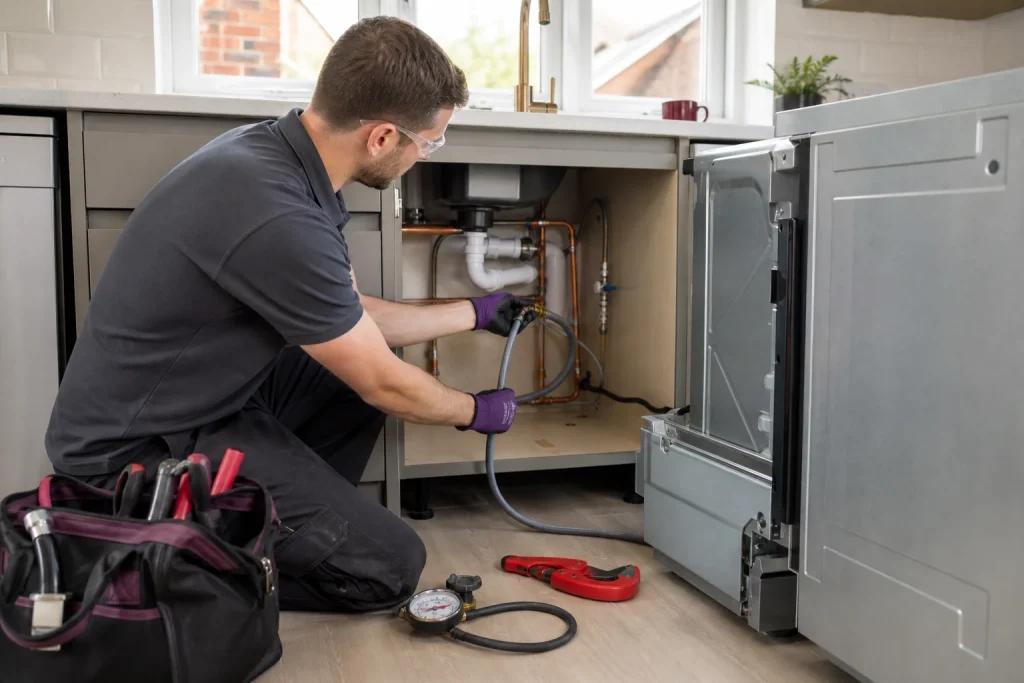
A new dishwasher often looks like a simple swap-in job: slide it under the worktop, connect the hoses and switch it on. In many kitchens, the existing plumbing will be suitable, especially if a dishwasher or washing machine has been fitted there before.
However, a neat installation depends on more than just finding a spare pipe under the sink. The water feed, waste connection, hose route and isolation valve all need to be right if the appliance is going to run reliably without leaks, smells or drainage problems.
What a dishwasher normally needs
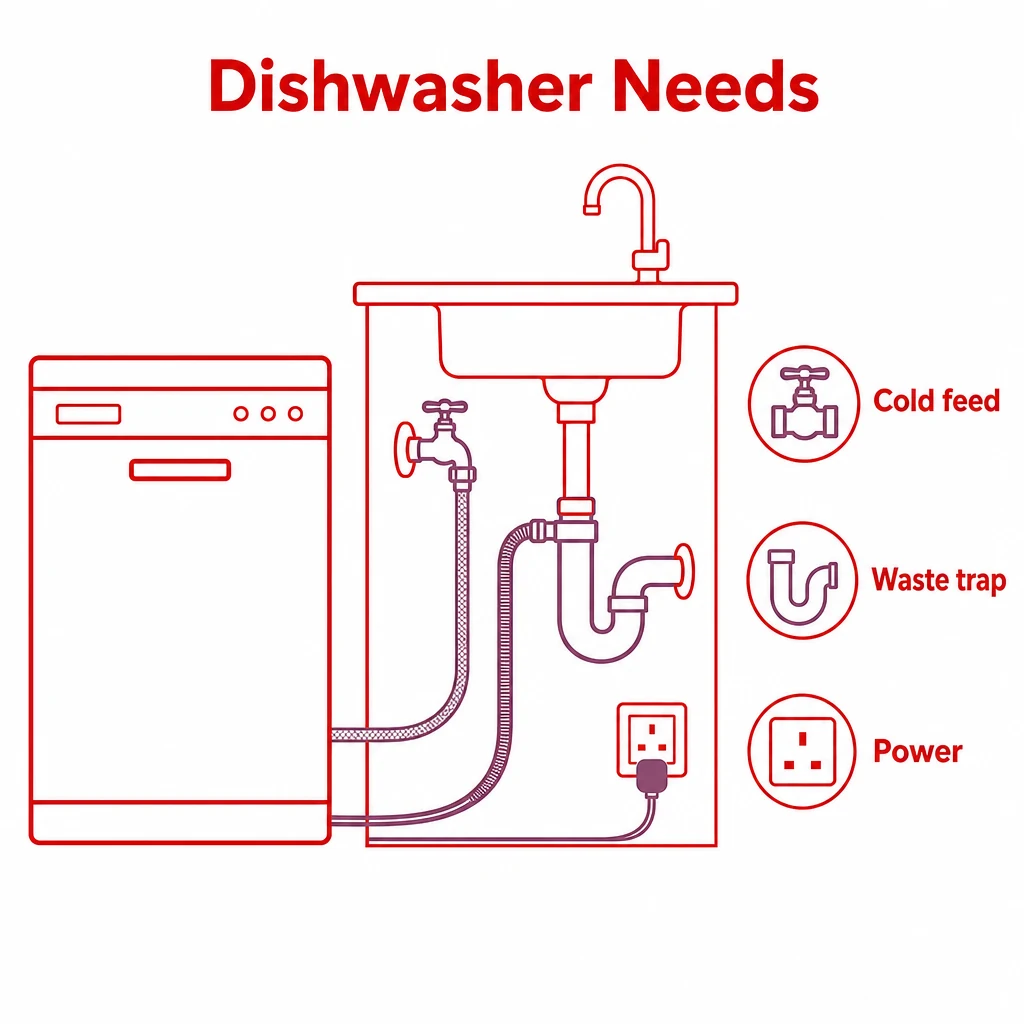
Most dishwashers need three things: a cold water supply, a waste outlet and a safe electrical supply nearby. From a plumbing point of view, the important parts are the cold feed and the drainage route.
The cold feed is usually taken from the kitchen’s mains cold pipework, often through a small isolation valve so the appliance can be turned off without shutting water to the whole property. The inlet hose then screws onto this valve. The connection should be tight, accessible and not strained.
The waste hose carries used water away from the dishwasher. It commonly connects to a spigot on the sink trap or to a dedicated appliance waste connection. It also needs to be positioned correctly so dirty water from the sink cannot run back into the dishwasher.
If the space already had a dishwasher, the basics may already be in place. If it previously housed a cupboard, fridge or freestanding unit, the plumbing may need adapting before the appliance can be connected safely.
When existing kitchen plumbing is likely to be suitable
Your current connections may be suitable if there is a cold water valve close to the dishwasher space, a proper waste connection under the sink and enough room for the hoses to run without being crushed. The appliance should also sit level, with the hoses reaching naturally to their connection points.
A suitable water valve will usually be clearly visible and easy to turn. It should not be seized, heavily corroded or hidden behind fixed units. A suitable waste connection should be capped if unused, secure if already in use, and connected to a trap that is in good condition.
It is also important that the route behind or beside the cabinets allows the hoses to pass through smoothly. Tight kinks can restrict water flow or drainage. Holes cut through cabinets should be large enough and positioned so the hose does not rub on sharp edges.
If all of these points are in place, installation may be straightforward. For a tidy, checked connection, All Plumbing Services can help with appliance installations including dishwasher water and waste connections.
When the plumbing may need adapting
Some kitchens look ready for a dishwasher but need small alterations first. A common example is a sink trap without a spare appliance spigot. In that case, the trap may need replacing with one that accepts a dishwasher waste hose. This should be done carefully so the trap still seals properly and drains well.
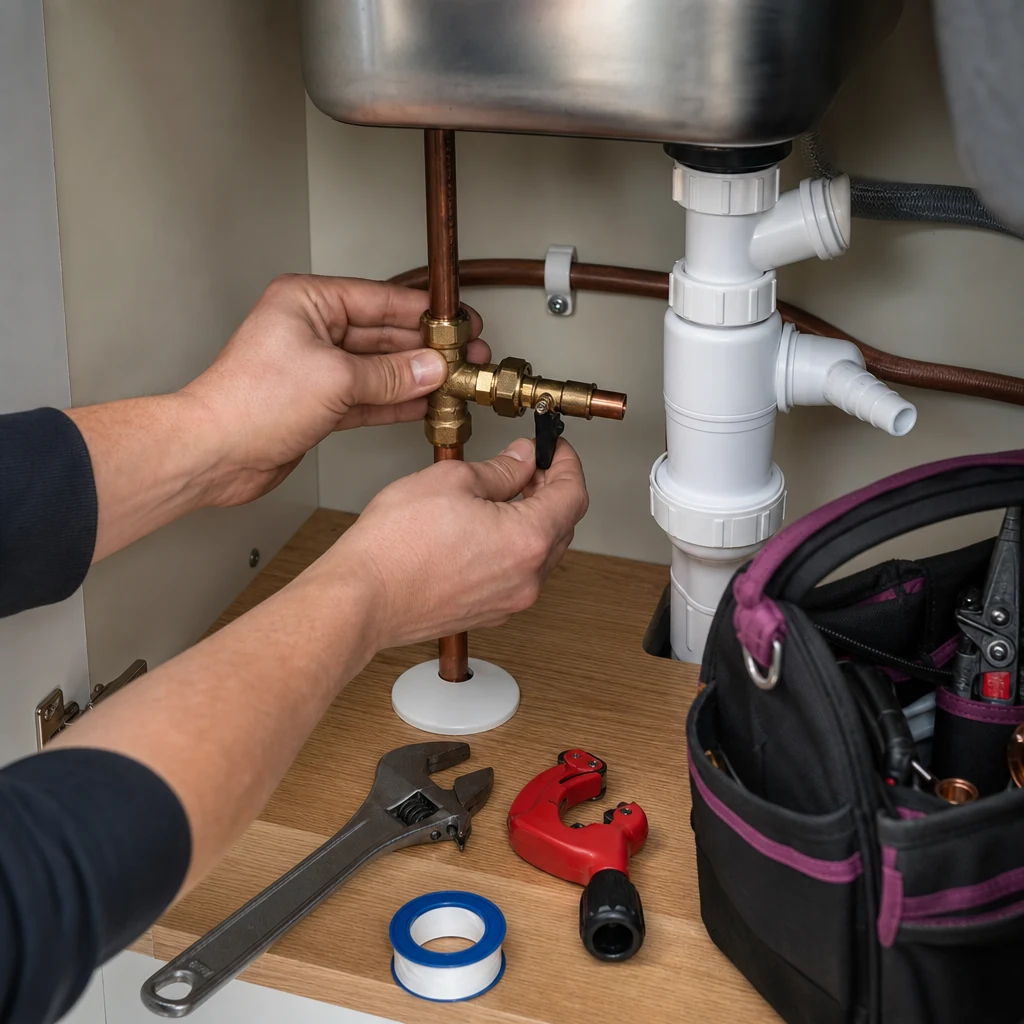
The cold water supply may also need attention. If there is no suitable isolation valve, a plumber can add one to the existing cold pipework. This gives you a proper point for the inlet hose and a simple way to turn the appliance off for servicing or replacement.
Older fittings can be another issue. Valves can weep when disturbed, washers can harden, and previous DIY connections may not be secure. A plumber will usually prefer to correct weak points before the dishwasher is pushed back into place, because a small drip behind a unit can go unnoticed.
Waste hose extensions also need care. While extension kits exist, long or poorly routed waste runs can drain slowly or leave water sitting in the hose. A better solution may be to adjust the plumbing layout so the dishwasher connects within the appliance manufacturer’s guidance.
If the dishwasher is being moved to a new position, pipework may need to be extended through cabinets or along a wall. This is where neat copper or plastic pipework, proper clipping and accessible isolation points make a real difference.
What a plumber checks before connecting a dishwasher
A competent plumber will not just attach the hoses and leave. They will check the condition of the supply valve, the thread on the inlet connection, the waste trap, the hose route and the general pipework around the sink base.
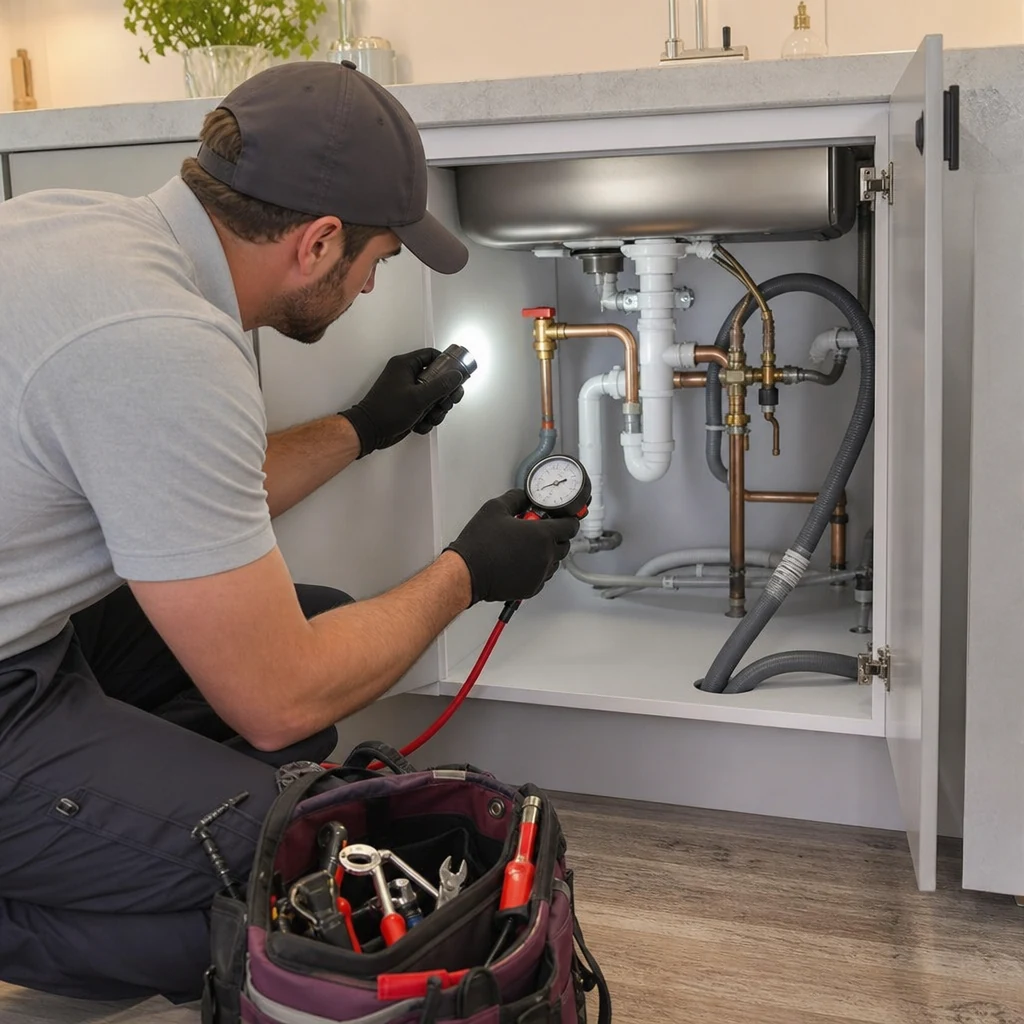
They will also look for signs of previous leaks, such as swollen cabinet bases, staining, loose compression fittings or damp around the trap. These clues can reveal small faults that are worth fixing before a new appliance is installed.
Once connected, the dishwasher should be tested through a fill and drain cycle where possible. This helps confirm that water enters correctly, the inlet connection stays dry, the waste hose does not leak, and the sink trap copes when the appliance pumps out.
Good installation also includes practical details. The appliance should not squash its hoses when slid back. The isolation valve should remain reachable. The waste hose should be secured so it cannot pull loose. Any unused waste spigots should be capped to prevent smells and leaks.
Electrical safety is separate from plumbing. A plumber can advise if the existing socket position appears unsuitable, but electrical alterations should be handled by an appropriately qualified person.
Can you connect a dishwasher yourself?
If the correct valve and waste connection are already in place, some householders choose to connect a dishwasher themselves. The key is to follow the appliance instructions, avoid overtightening plastic fittings and check carefully for leaks during and after the first cycle.
That said, it is sensible to call a plumber if anything is unclear, damaged or missing. This includes no isolation valve, an old or leaking trap, a waste hose that will not reach properly, awkward cabinet access, or pipework that needs cutting and altering.
Integrated dishwashers can also be more involved than freestanding models. The appliance needs to sit correctly, line up with the surrounding units and still leave enough space for the hoses behind it. If the hose bends sharply when the machine is pushed home, a connection that looked fine during installation can become a problem later.
A professional connection gives reassurance that the supply can be isolated, the waste is properly arranged and the appliance has been checked before regular use.
Practical tips before your installation
Before fitting day, clear the cupboard under the sink so the pipework is easy to inspect. If you know where the main stop tap is, check that it can be accessed. Do not force old valves, but make sure the area around them is clear.
Measure the appliance space carefully, including height, width and depth. Remember that hoses and plugs need room behind or beside the machine. If replacing an old dishwasher, keep the existing hoses visible until the new appliance is ready to connect, as they can help show how the previous setup worked.
If you have noticed slow sink drainage, gurgling, smells from the cupboard or damp patches, mention this before the dishwasher is connected. These symptoms may point to trap or waste pipe issues that should be put right first.
It is also worth keeping the installation manual to hand. Manufacturers often give clear limits for hose height, hose length and connection methods, and a good installation should work with those requirements rather than against them.
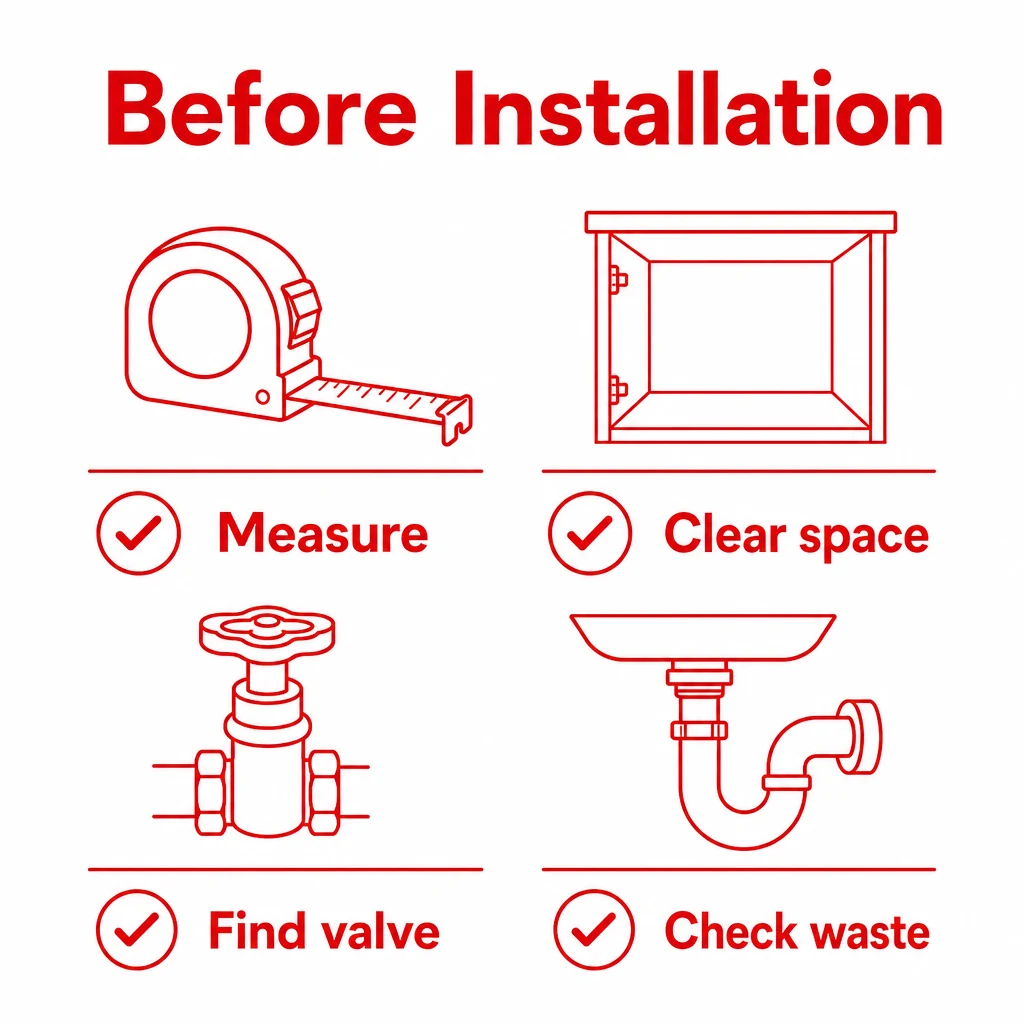
- A dishwasher usually needs a cold water feed, a suitable waste outlet and a safe nearby electrical supply.
- Existing plumbing may be usable if the valve, trap and hose route are accessible and in good condition.
- A plumber should adapt the pipework if valves, traps, waste routes or cabinet access are not suitable.
- Testing the appliance after connection helps catch leaks and drainage issues early.
Frequently asked questions
Does a dishwasher use hot or cold water?
Most modern dishwashers are connected to the cold mains supply and heat the water internally. Always check the manufacturer’s instructions for the specific appliance.
Can a dishwasher share the sink waste?
Yes, many dishwashers connect to a spigot on the kitchen sink trap. The trap must be suitable, secure and arranged so waste water cannot flow back into the appliance.
Do I need an isolation valve for a dishwasher?
An isolation valve is strongly recommended because it lets you turn off the dishwasher’s water supply without shutting off water elsewhere in the property.
What if there is no existing dishwasher connection?
A plumber can usually add a suitable cold feed and waste connection from nearby kitchen pipework, provided the layout allows a safe and accessible installation.
Need help connecting a dishwasher?
If you are unsure whether your existing kitchen plumbing is suitable, All Plumbing Services can check the connections and fit your appliance safely and neatly.