


If your boiler pressure keeps dropping, topping it up can feel like a quick win. The heating comes back on, the warning disappears and everything seems normal again.
But if you are topping up every few days, every week, or even every month, the system is trying to tell you something. Pressure loss usually has a cause, and finding it early can help prevent leaks, corrosion, boiler faults and avoidable breakdowns.
What boiler pressure should normally do
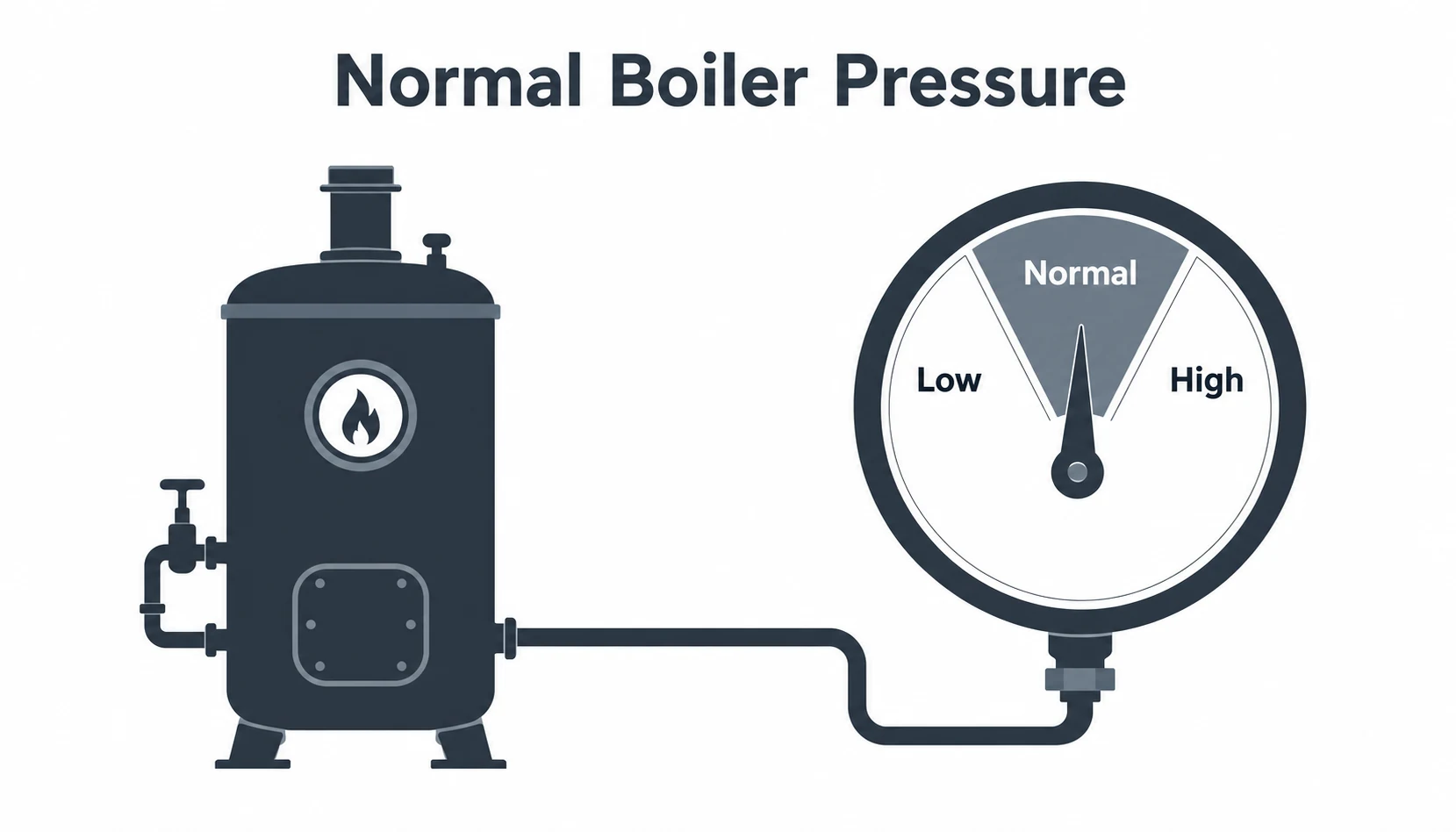
Most sealed heating systems need a certain amount of water pressure to move hot water around the boiler, radiators and pipework. When the system is cold, the pressure gauge will usually sit around a normal working range set by the boiler manufacturer. When the heating comes on and the water expands, the reading may rise a little. That is expected.
What is not expected is a steady drop that keeps taking the gauge too low. If the boiler stops working until you add more water, or the pressure warning returns after each top up, the issue is unlikely to be solved by the filling loop alone.
A one off drop can happen after radiator bleeding, recent plumbing work, or a small amount of air leaving the system. Repeated pressure loss is different. It points towards water escaping, air entering, a boiler component not coping properly, or a fault elsewhere in the heating circuit.
Why topping up is only a temporary fix
Adding water through the filling loop restores pressure, but it does not explain where the pressure went. That matters because a sealed heating system should not need frequent refilling under normal use.
Every top up introduces fresh water into the system. Fresh water contains oxygen and minerals, which can contribute to internal corrosion and sludge over time. If the system already has a small leak or failing component, repeated refilling may keep the boiler running while the underlying problem quietly gets worse.
There is also a practical risk. If too much water is added, the pressure can rise too high when the heating warms up. That can cause the pressure relief valve to discharge water, which may then create an ongoing pressure loss cycle.
If your boiler pressure keeps dropping after you refill it, it is sensible to treat topping up as a short term measure only. For a recurring problem, All Plumbing Services can investigate through its boiler repair service and check whether the cause sits inside the boiler, around the radiators, or within the wider heating pipework.
Common causes of repeated boiler pressure loss
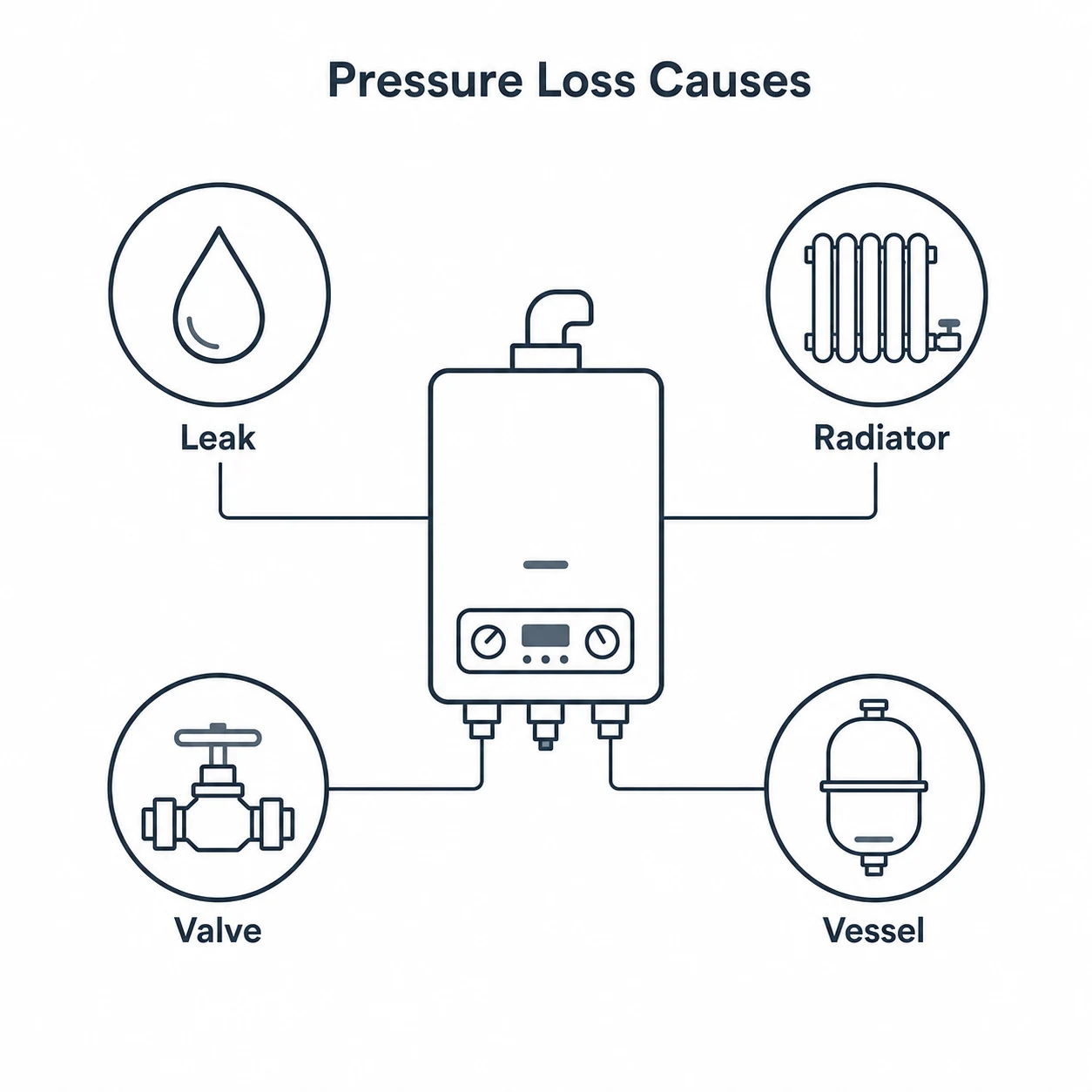
The cause is not always obvious. Some leaks show as a wet patch under a radiator valve, while others only appear when the heating is hot. A few common possibilities include:
- Radiator valve leaks: Even a small weep around a valve, nut, spindle or pipe connection can slowly lower pressure.
- Hidden pipework leaks: Pipework under floors, behind units or inside boxing can lose water without leaving an obvious mark at first.
- Pressure relief valve discharge: If system pressure rises too high, the valve may let water out through the discharge pipe. Once it has opened, it may not always reseal perfectly.
- Expansion vessel problems: The expansion vessel helps absorb the increase in pressure as heating water warms. If it loses its charge or fails, pressure may rise and then drop again.
- Air in the system: Trapped air can make pressure readings less stable and may lead to radiator cold spots, noise and uneven heating.
- Boiler component faults: Internal seals, heat exchangers and other parts can contribute to pressure loss, depending on the boiler type and fault.
If the boiler also keeps needing a reset, pressure loss may be part of a wider fault pattern. In that case, it may help to compare the symptoms with this guide to a boiler fault that keeps coming back after reset.
Checks you can do before calling an engineer
There are a few safe checks a homeowner can make without opening the boiler case or touching gas, oil, electrical or sealed internal components.
Start by looking at the pressure gauge when the system is cold, then again after the heating has been running. Make a note of how quickly the pressure drops after each top up. A drop within hours is more urgent than a slow fall over several weeks, but both are worth understanding.
Walk around the radiators and visible pipework. Look for damp flooring, staining, green or white marks on copper joints, rust around radiator valves, or small beads of water near nuts and connections. Check around towel rails, airing cupboards and any visible heating pipes.
If you have recently bled radiators, the pressure may have dropped because air was released. In that case, one careful top up may be expected. If the pressure continues to fall after that, there is probably another cause.
Do not remove the boiler cover or try to adjust internal parts. The issue may be simple, but boilers are safety critical appliances. A qualified heating engineer has the equipment and experience to test the system properly without creating extra risk.
When pressure loss needs prompt attention
Some signs mean the problem should be checked sooner rather than later. These include the boiler repeatedly locking out, pressure dropping soon after every top up, water appearing near the boiler, damp patches near radiators, unusual noises, radiators not heating properly, or pressure rising too high when the heating is on.
You should also get help quickly if you are unsure how to refill the system safely, if the filling loop does not seem to work as expected, or if you have added water and the pressure continues to fall straight away.
Pressure loss can also become more noticeable when heating demand increases. A system that has been quiet for months may show weak points once radiators are used more often. If you are preparing the heating for colder weather, this guide on getting your central heating winter ready explains other checks that can reduce the chance of disruption.
How an engineer finds the real cause
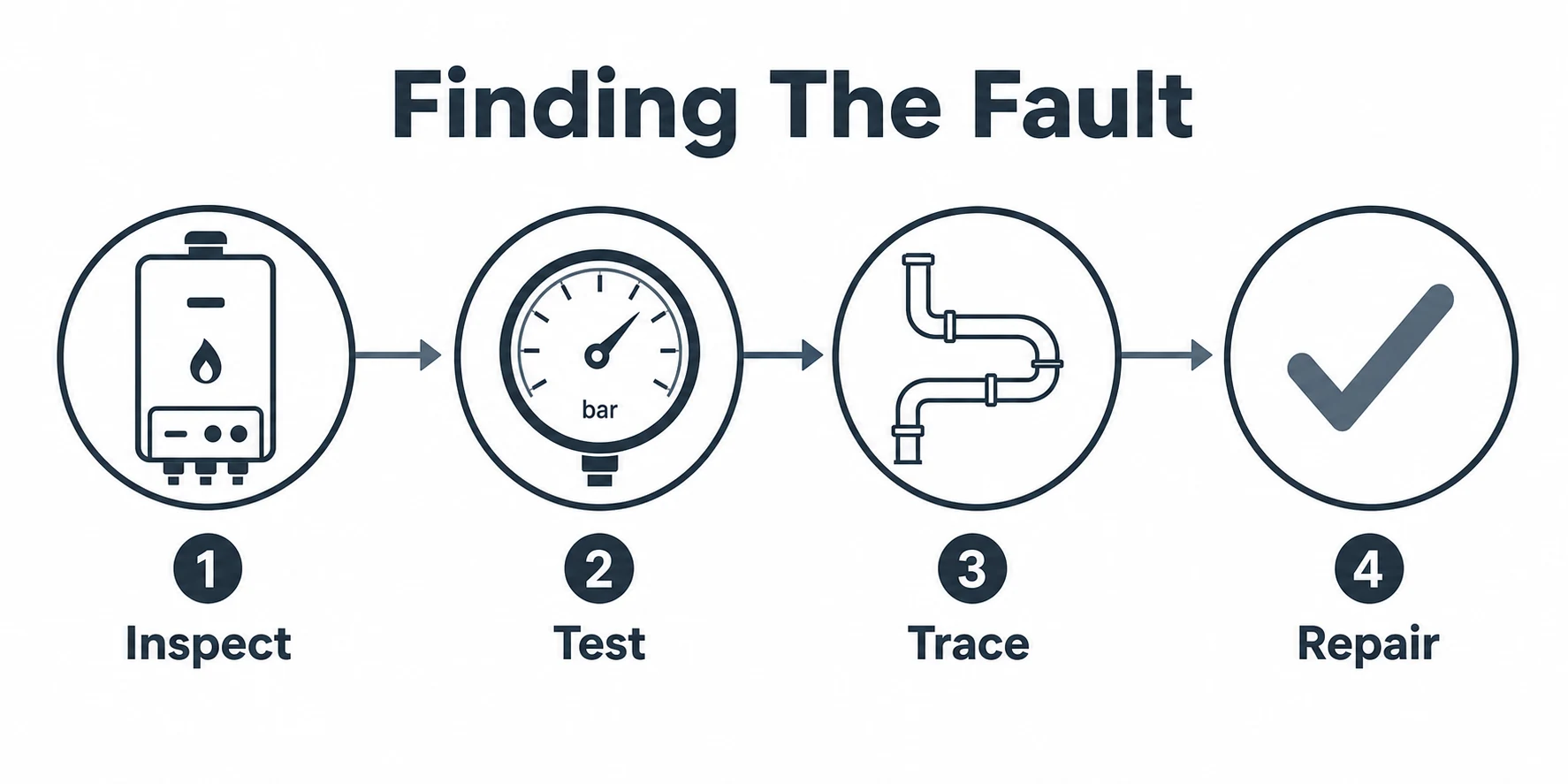
A heating engineer will usually begin with the pattern of pressure loss. How often it happens, whether it drops when hot or cold, and whether the boiler has shown any fault codes can all narrow the search.
The engineer may inspect the boiler, radiators, valves, visible pipework, expansion vessel and pressure relief discharge. They may also test whether the system holds pressure and look for signs of internal or external water loss.
Sometimes the repair is straightforward, such as replacing a leaking valve or dealing with an expansion vessel issue. In other cases, further investigation may be needed to trace hidden pipework leaks or recurring component faults.
If the boiler is older, pressure loss may sit alongside other reliability problems. That does not automatically mean replacement is needed, but it can help to understand the wider picture. If breakdowns are becoming frequent, you may find this article on when to consider replacing an old boiler useful.
The important point is that a proper diagnosis gives you options. Rather than repeatedly topping up and hoping the fault settles down, you can deal with the cause and protect the rest of the heating system.
- A sealed heating system should not need frequent topping up under normal use.
- Repeated pressure loss usually means water is escaping, pressure is being released, or a component needs checking.
- Topping up restores pressure temporarily, but it does not fix the underlying cause.
- Small leaks can be easy to miss, especially around valves, hidden pipework or boiler discharge pipes.
- If the pressure keeps dropping, arrange a qualified heating inspection before the fault worsens.
Frequently asked questions
How often should I need to top up boiler pressure?
You should not need to top up a sealed heating system regularly. A one off top up after bleeding radiators or recent work can be normal, but repeated refilling suggests the system should be checked.
Can I keep using my boiler if the pressure keeps dropping?
If the boiler is running and there are no safety concerns, it may work after topping up, but repeated pressure loss should not be ignored. The cause may worsen and could lead to leaks, corrosion or boiler lockouts.
Why does my boiler pressure drop overnight?
A drop overnight can happen if the system is losing water while cold, if pressure changes after heating has cooled, or if a component is not holding pressure properly. Tracking the gauge when hot and cold can help an engineer diagnose it.
Is low boiler pressure dangerous?
Low pressure itself usually means the boiler cannot circulate water properly, so it may stop working or show a fault. The bigger concern is why the pressure is low, especially if there is a leak or repeated need to refill.
Get repeated pressure loss checked
If your boiler pressure keeps dropping after top ups, All Plumbing Services can inspect the system, find the likely cause and advise on the right repair before the problem becomes more disruptive.