


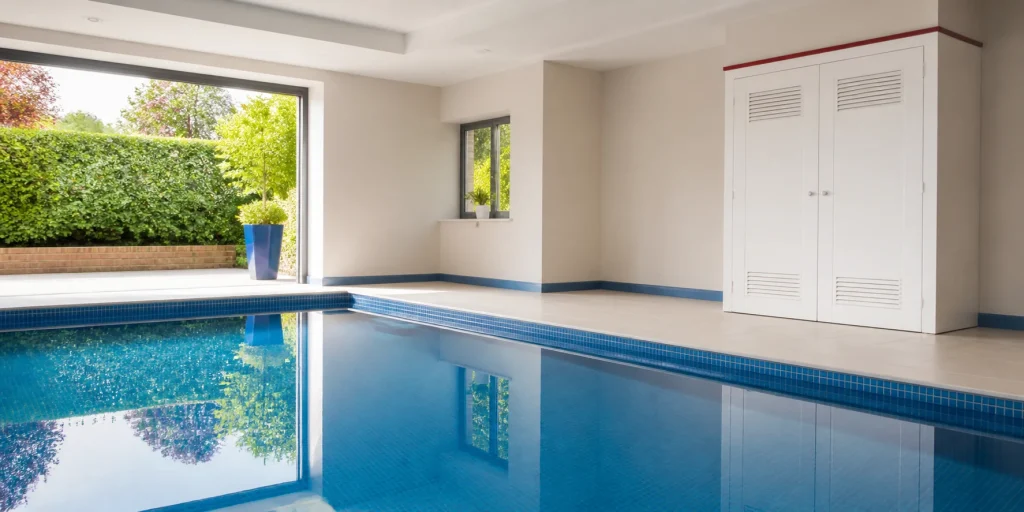
A swimming pool boiler can only do its job properly when water moves through the system at the right rate. If the flow is too weak, restricted or badly balanced, the boiler may run without transferring heat efficiently to the pool water.
That is why flow rate is one of the first things a qualified heating engineer should consider when assessing a pool heating setup. The boiler itself matters, but so do the pipework, pump, filters, valves and the way the whole system circulates.
What flow rate means in a pool heating system
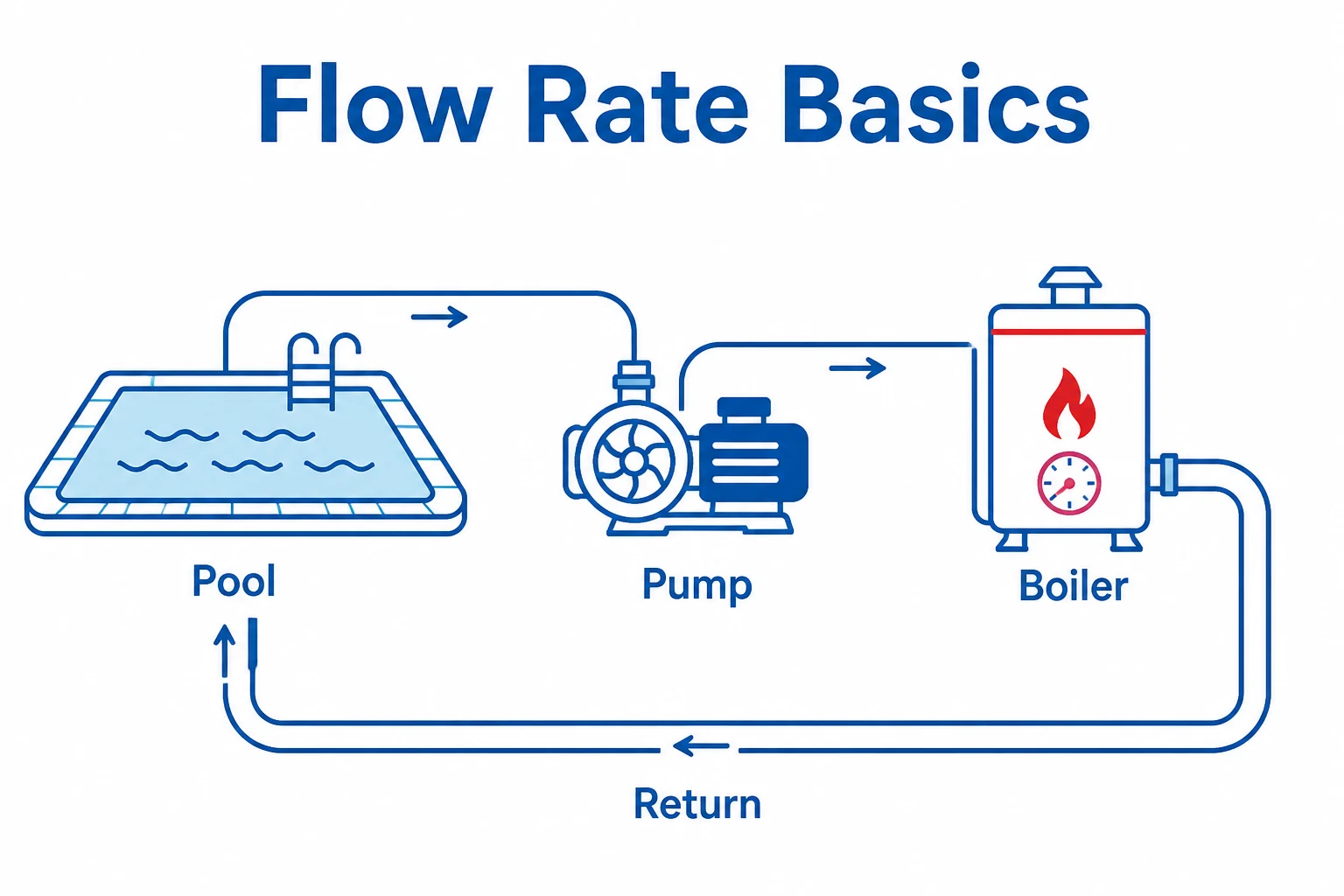
Flow rate is the amount of water passing through the boiler or heat exchanger within a given time. In simple terms, the boiler needs enough moving water to absorb the heat it produces and carry that warmth back into the pool.
If water moves too slowly, heat can build up inside the appliance rather than being transferred smoothly. If it moves too quickly, the water may not pick up heat as effectively during each pass. The correct flow depends on the boiler, the pool volume, the pipework layout and the circulation equipment.
Most pool heating arrangements rely on a pump to move water through filtration equipment and, where fitted, through the boiler or heat exchanger circuit. Any weak point in that route can affect performance. A partially closed valve, a blocked filter, narrow pipework or poor pump selection can all change the flow reaching the boiler.
This is why swimming pool boiler performance is rarely about one component in isolation. A reliable setup needs the appliance and circulation system to work together. If you are planning a new installation, it is sensible to have the whole arrangement assessed before choosing a boiler. All Plumbing Services explains more about dedicated swimming pool boiler services for installation, servicing and repair.
Why poor flow stops a pool boiler heating efficiently
When flow is poor, a pool boiler may appear to be working but still struggle to raise the water temperature. The appliance may fire, the controls may respond and the pipework may feel warm, yet the pool itself may take far longer than expected to heat.
Low flow can reduce heat transfer. Instead of warm water being circulated consistently through the pool, heat may stay concentrated around the boiler circuit. In some systems, the boiler may cycle on and off more often because internal temperatures rise too quickly. That can make heating feel inconsistent and can place unnecessary strain on components.
Restricted flow can also cause nuisance faults. Modern heating appliances are designed to protect themselves, so they may shut down if they detect unsafe temperatures, pressure issues or poor circulation. Resetting the boiler without finding the cause may only give temporary relief.
Common reasons for poor flow include dirty filters, blocked strainers, air in the system, undersized pumps, incorrect valve positions, unsuitable pipe diameters and debris in pipework. In older systems, past alterations can also create bottlenecks that are not obvious until the boiler is asked to work harder.
A useful assessment looks beyond the fault code. It checks whether the boiler is receiving the flow it needs, whether water can return freely to the pool and whether the installation matches the manufacturer guidance for that type of appliance.
How pipework affects boiler performance
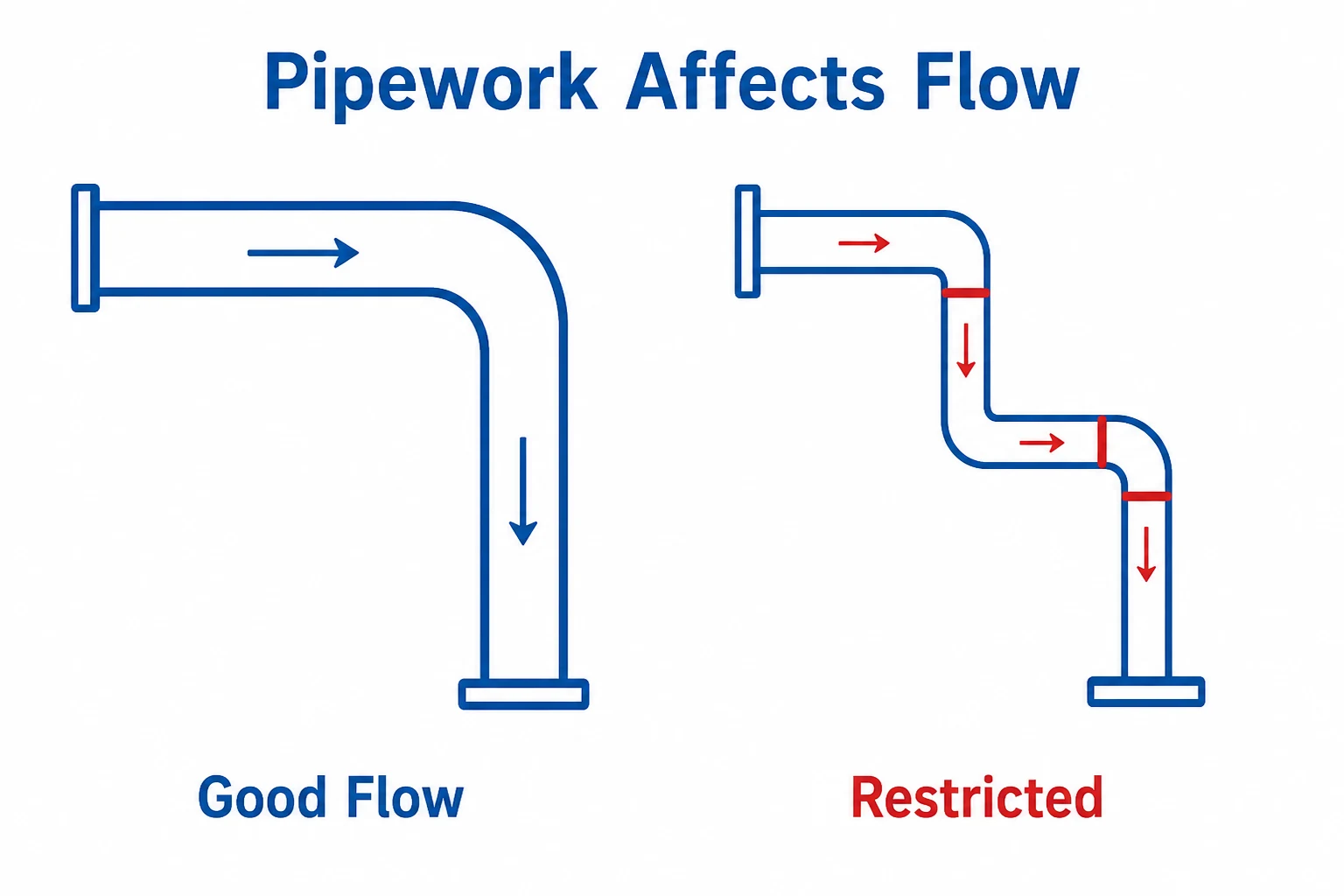
Pipework has a direct effect on flow. Even a capable pump can struggle if water is forced through a route that is too narrow, too long or full of restrictive fittings. Every bend, valve and change in pipe size can add resistance.
Good pipework design helps water move cleanly through the heating circuit. The aim is not simply to connect the boiler to the pool system, but to create a route that allows correct circulation under real operating conditions. That includes thinking about access for maintenance, isolation valves, bypass arrangements and any filters or controls that sit in the circuit.
Unsuitable pipework can create several problems. The boiler may not receive enough water, the pump may work harder than necessary and heating may become uneven. In some cases, parts of the system may become warm while the pool temperature barely changes, because water is not circulating through the right path.
This is one reason a pool boiler should not be treated like a simple appliance swap. If an existing boiler has failed, the cause may be linked to the surrounding installation. A replacement fitted onto the same restricted pipework may inherit the same issue. For domestic heating systems, the same principle applies, which is why proper survey work matters for any boiler installation.
Signs the flow rate may be wrong
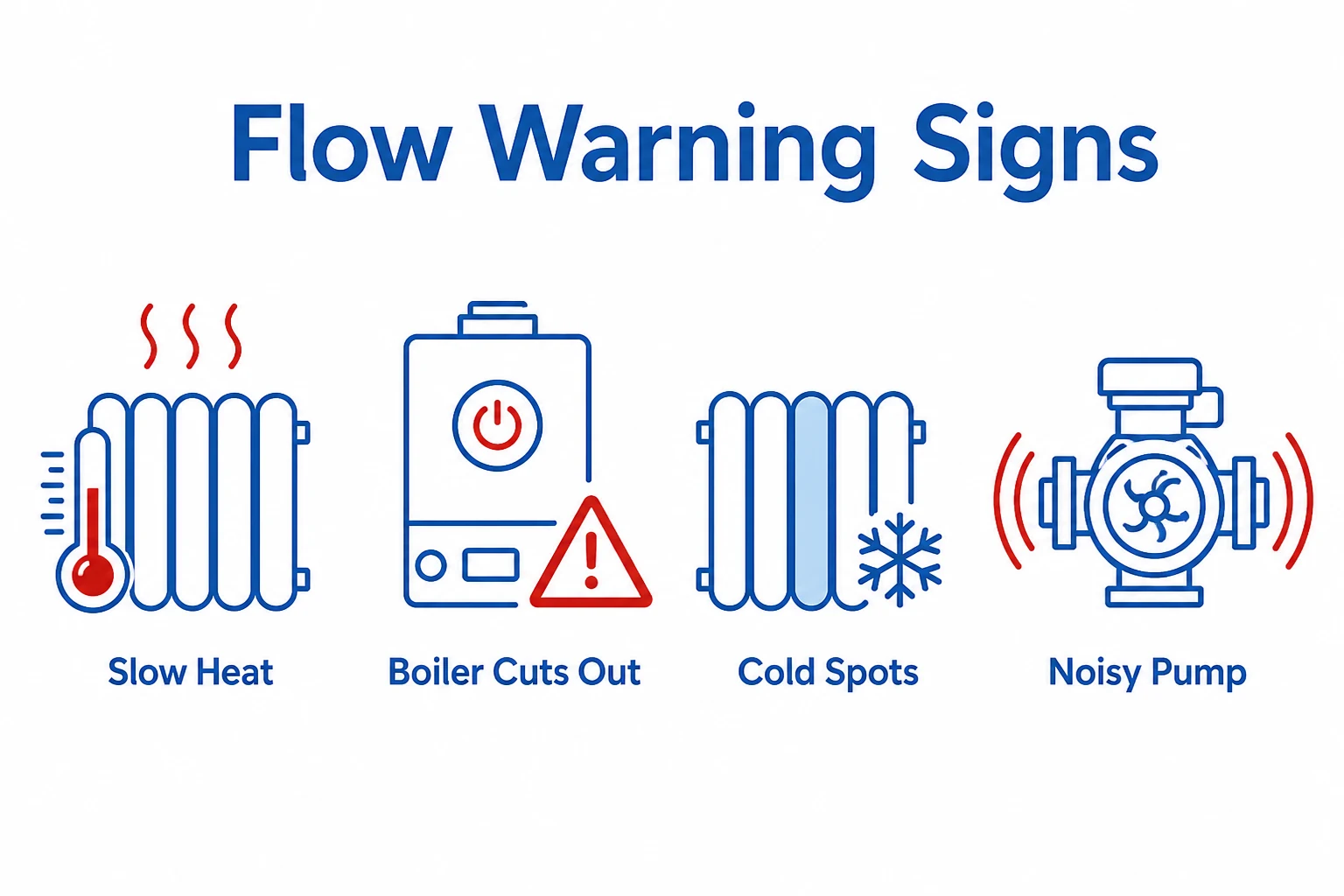
Pool heating problems can have several causes, but certain symptoms suggest flow should be checked. These signs do not prove the exact fault on their own, but they are useful indicators that the circulation side of the system needs attention.
- The pool takes much longer than usual to warm up.
- The boiler fires but switches off again before the pool reaches temperature.
- Fault codes or lockouts happen repeatedly after resetting.
- Pipework near the boiler becomes hot, but heat does not seem to reach the pool effectively.
- The pump sounds strained or circulation through the pool feels weak.
- Filters or strainers need frequent cleaning because flow drops quickly.
- Heating performance changes after valve adjustments, filter cleaning or other maintenance.
It is tempting to assume the boiler is undersized whenever a pool heats slowly. Sometimes sizing is part of the issue, but circulation problems can make even a suitable boiler perform badly. Before replacing major equipment, an engineer should check whether the existing system can move water at the required rate.
If the boiler is failing to operate reliably, professional fault finding is the right route. All Plumbing Services also provides boiler repair support where heating faults need proper diagnosis rather than guesswork.
Why a qualified heating engineer should assess the setup
A swimming pool boiler connects water, heat, controls and, in many cases, gas or oil fired equipment. That makes correct assessment important for efficiency, reliability and safety. A qualified heating engineer can look at the whole installation, not just the appliance casing.
A proper assessment may include checking the boiler specification, pump performance, pipe sizes, pressure readings, filter condition, valve positions, bypass setup and circulation route. The engineer may also review whether the system is suitable for the pool size and how the boiler is controlled.
This matters before installation because the chosen boiler must match the wider system. It also matters during repair because the fault may be caused by poor circulation rather than a failed part. Replacing components without resolving flow restrictions can leave the customer with the same heating problem.
There is also a practical advantage. When the system is set up correctly, the boiler can heat more consistently and the controls are easier to understand. The pool owner gets clearer performance, and routine servicing becomes more straightforward because isolation points, filters and access routes have been considered.
If you are comparing heating options generally, it can help to understand how different systems behave. The All Plumbing Services guide to heat pumps and boilers gives useful context for choosing a suitable approach.
What happens during a flow related boiler check
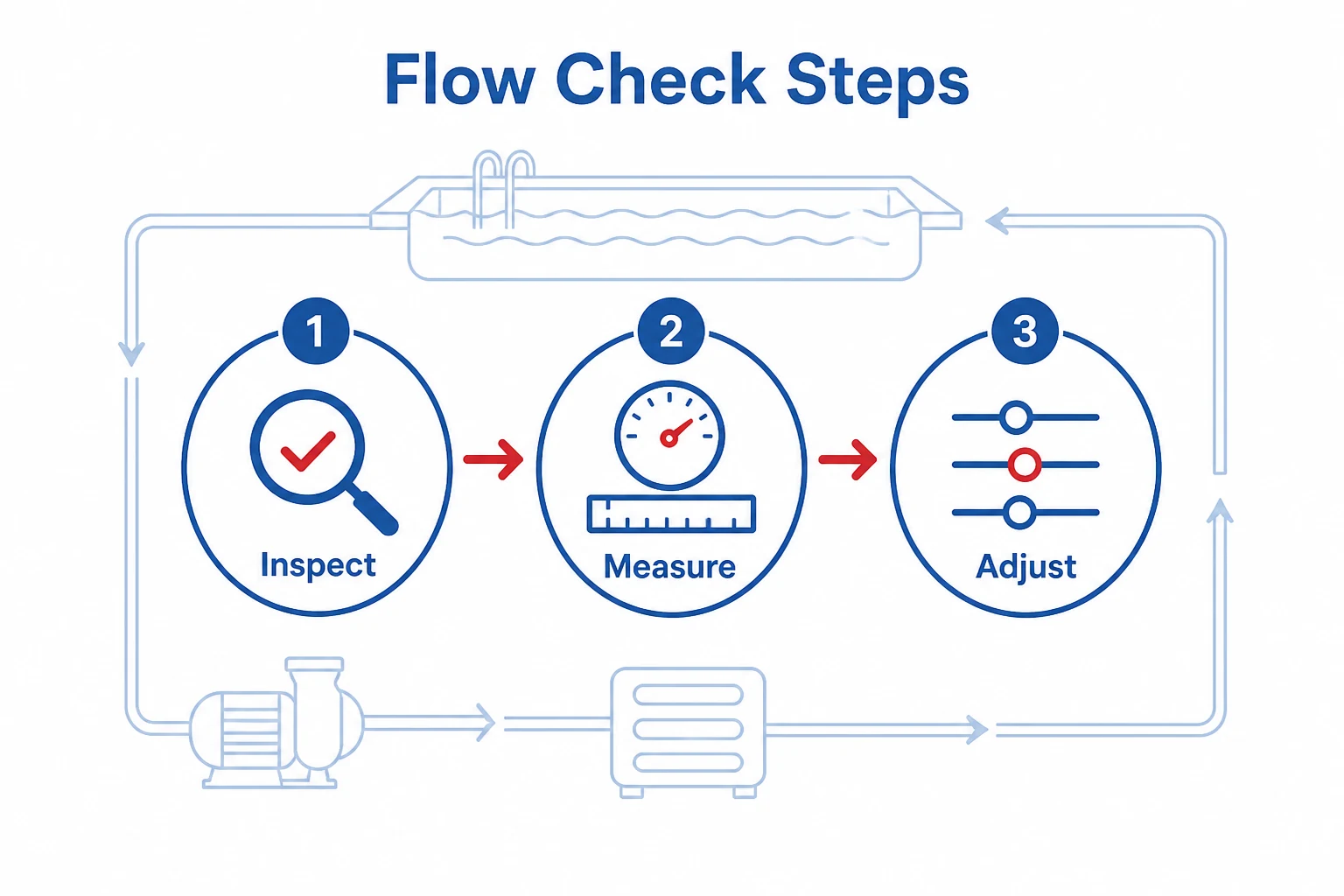
A flow related boiler check usually starts with the symptoms. The engineer will want to know whether the problem is slow heating, intermittent lockouts, poor circulation, unusual noises or a recent change to the system. Small details can help narrow down whether the issue began after maintenance, pipework changes, filter cleaning or seasonal restart.
The next step is usually a physical inspection. This can include checking pipe routes, valves, strainers, filters, pumps, gauges and visible signs of leaks or restriction. Where relevant, the engineer will compare the installation with the boiler requirements and look for anything that could reduce or unbalance flow.
Controls are also important. A boiler may be perfectly capable of heating the pool, but poor control setup can cause short running times, repeated cycling or confusion between pool demand and boiler operation. The aim is to make sure the boiler is being asked to run at the right time and under the right conditions.
The outcome should be practical advice. That might mean cleaning or replacing a filter, adjusting valves, improving pipework, resolving air problems, changing a pump setup or recommending boiler work. The best solution is the one that deals with the cause, not just the symptom.
- Correct flow rate helps a swimming pool boiler transfer heat efficiently into the water.
- Poor circulation can make a suitable boiler look underpowered or unreliable.
- Pipework, pumps, filters, valves and controls all affect boiler performance.
- Repeated lockouts, slow heating and weak circulation should be assessed professionally.
- A qualified heating engineer should check the whole system before installation or repair.
Frequently asked questions
Can low flow damage a swimming pool boiler?
Low flow can cause overheating, cycling or protective shutdowns, depending on the boiler and controls. The appliance is designed to protect itself, but repeated circulation problems should be investigated rather than repeatedly reset.
Does a bigger boiler solve slow pool heating?
Not always. A larger boiler may still perform badly if the pipework, pump or filters restrict circulation. The flow rate and system design should be checked before deciding whether boiler size is the main issue.
How do I know if my pool boiler has a flow problem?
Common clues include slow heating, repeated lockouts, hot pipework near the boiler, weak circulation and performance changes after filter or valve adjustments. An engineer can test the system properly and identify the cause.
Should flow be checked before a new pool boiler is fitted?
Yes. Checking flow before installation helps confirm that the pipework, pump and controls are suitable for the chosen boiler. It can prevent avoidable performance problems after the appliance is fitted.
Need help with a swimming pool boiler?
If your pool boiler is slow to heat, cutting out or due for replacement, All Plumbing Services can assess the boiler, pipework and circulation setup properly.