


A boiler reset can feel like a quick win. The heating comes back on, the hot water returns and the fault code disappears from the display.
The problem is that a reset does not repair the cause of the fault. It simply asks the boiler to try again, which is why the same issue can return hours, days or weeks later.
What a boiler reset actually does
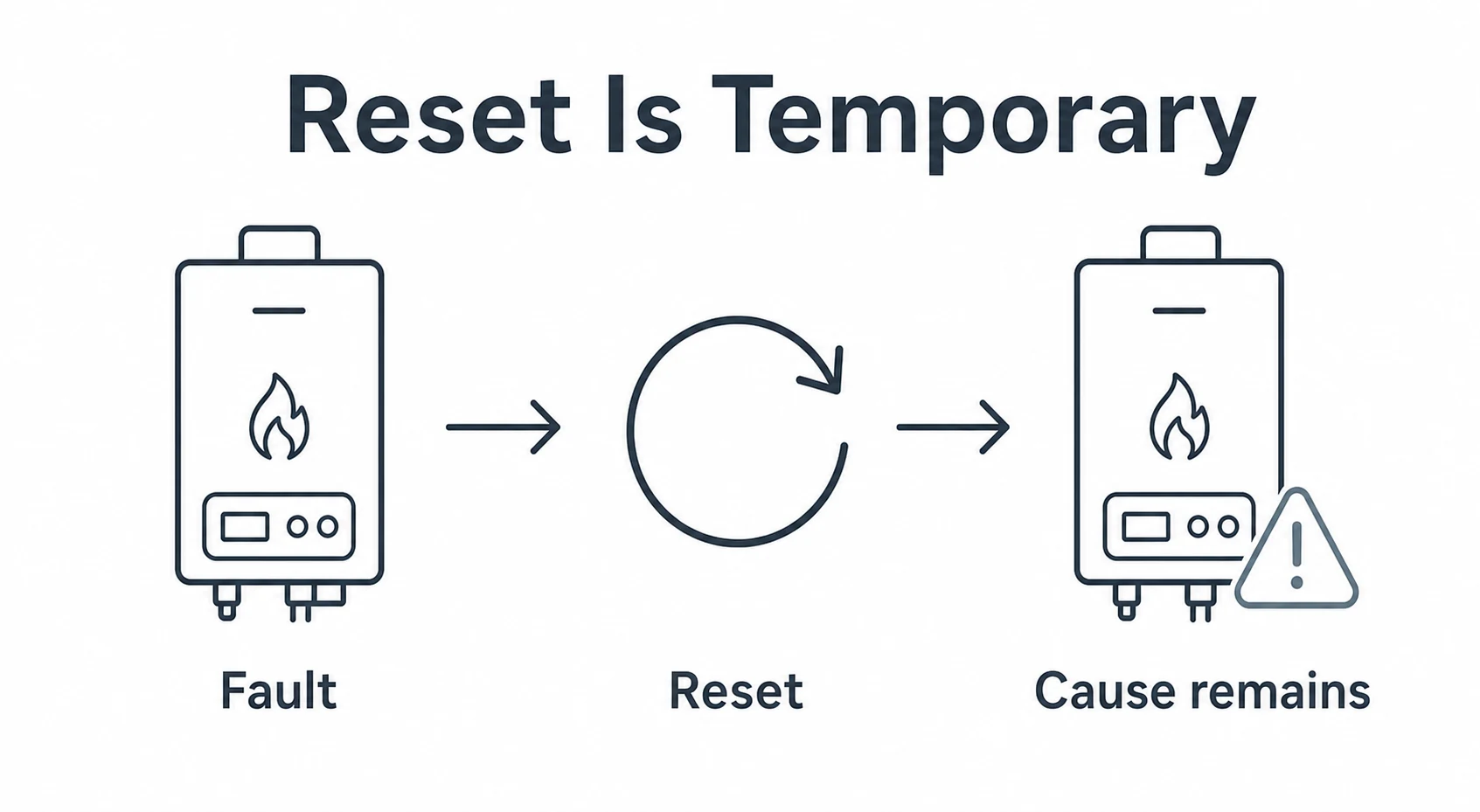
Most modern boilers have a reset button or reset function because the appliance is designed to shut down when it detects a fault. This is a protective response. The boiler may stop because it has sensed low pressure, poor circulation, ignition trouble, overheating, a blocked condensate pipe, a fan issue or another condition that needs attention.
When you press reset, you are not clearing the physical fault. You are clearing the lockout state and allowing the boiler to run through its start sequence again. If the fault was brief, such as a temporary interruption in gas supply or a momentary pressure fluctuation, the boiler may continue working normally. If the underlying condition is still present, the boiler will usually lock out again.
This is why repeated resetting can be misleading. It can make the boiler appear usable for a while, but the same safety control is still reacting to the same problem. If the appliance keeps needing a reset, it is sensible to arrange boiler repair from a qualified engineer rather than treating the reset button as part of everyday use.
Why the fault may disappear for a short time
Some boiler faults are intermittent. That means the boiler can pass its checks in one moment and fail them in another. A reset may work because the conditions have changed just enough for the boiler to restart, even though the cause has not gone away.
For example, a boiler with circulation problems may restart when the system has cooled slightly, then lock out again once it reaches temperature. A boiler with ignition trouble may light successfully one time, then fail the next. A pressure issue may seem fine when the heating is off, then return when the system warms and expands.
This is also common with faults linked to components that are beginning to wear. Pumps, fans, diverter valves, sensors and electrodes can all behave inconsistently before they fail completely. The boiler control board can only respond to what it detects at the time. It cannot fix a part that is sticking, weakening or giving an unreliable reading.
That is why the pattern matters as much as the fault code. If the boiler locks out after showers, after the heating has been running, overnight, during cold weather or whenever several radiators are on, those clues can help an engineer narrow down the cause.
Common reasons a boiler fault keeps returning
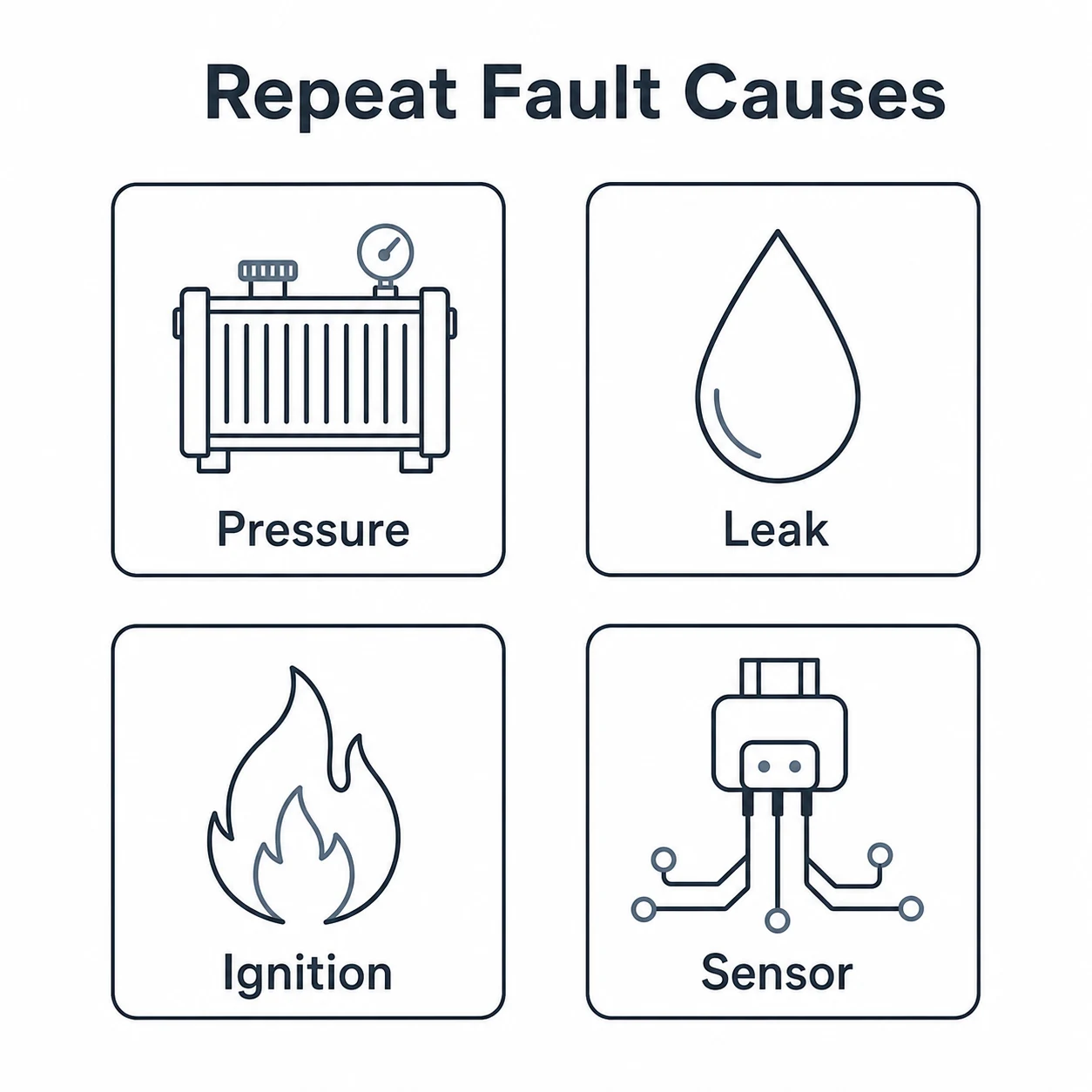
There are several repair issues that can come back after a reset. The exact cause depends on the boiler model, system design and fault code, but the following are common possibilities.
- Low or unstable pressure: The boiler may restart after being topped up, but pressure can drop again if there is a leak, a faulty pressure relief valve or an expansion vessel issue.
- Poor circulation: Sludge, trapped air, a weak pump or closed valves can stop heat moving around the system properly. The boiler may then overheat and shut down.
- Ignition faults: If the boiler struggles to light, the cause may involve the ignition electrode, flame sensor, gas valve or supply checks. This should always be handled by a qualified gas engineer.
- Condensate problems: A blockage in the condensate pipework can stop a condensing boiler from operating. A reset may only work until the same blockage affects drainage again.
- Sensor faults: Temperature sensors and pressure sensors help the boiler decide whether it is safe to run. If a sensor is giving inaccurate readings, the boiler may shut down even when the system seems normal.
- Heat exchanger issues: Scale, debris or restricted waterways can cause overheating, noise and repeated lockouts. This needs proper diagnosis rather than repeated restarting.
Some of these issues are simple for an engineer to put right once diagnosed. Others may point to broader system maintenance, such as cleaning, balancing or replacement parts. If radiators are slow to warm, noisy or uneven, it may also be worth comparing the symptoms with this practical guide to radiator repair and replacement.
When you should stop resetting the boiler
It is usually reasonable to reset a boiler once if the manual says it is safe to do so and you understand the instructions. If the same fault returns, or if the boiler needs repeated resets, it is time to stop and get it checked.
You should be especially cautious if the boiler makes unusual noises, smells unusual, loses pressure repeatedly, shows signs of leaking, trips electrics, fails to ignite, overheats or displays the same fault code again after a reset. You should also avoid removing boiler casing or attempting any gas related checks yourself.
A reset is not a maintenance routine. It is a recovery step after a protective shutdown. Repeated resets can delay a proper repair and may leave you without heating or hot water at the worst time. More importantly, the boiler is shutting down because one of its safety or operating checks has not been satisfied.
If the fault is becoming frequent, make a quick note of the code on the display, what the boiler was doing at the time and whether pressure has changed. This gives the engineer useful information and can speed up diagnosis.
How a qualified engineer diagnoses a returning fault
A good repair visit is not just about making the fault code vanish. The engineer will look for the cause behind the lockout and test the boiler in a controlled way.
Depending on the symptoms, this can include checking system pressure, looking for leaks, testing electrical components, checking combustion where appropriate, inspecting condensate drainage, confirming pump operation, assessing circulation and reviewing the boiler fault history. They may also test the appliance through heating and hot water demand to see when the problem appears.
This matters because different faults can produce similar symptoms. A boiler that cuts out during heating could have a circulation issue, a sensor problem, a pump fault or a restriction in the system. A boiler that refuses to light could involve ignition, flame detection or gas safety checks. Guesswork can lead to parts being changed unnecessarily, while proper diagnosis targets the real problem.
If your boiler is older and repair issues are becoming more regular, it can also be useful to weigh up repair against replacement. All Plumbing Services has a helpful guide on when to consider replacing an old boiler, which can help you think through reliability, parts availability and comfort.
How to reduce the chance of repeat faults
Not every boiler fault can be prevented, but routine care makes recurring problems less likely. Annual servicing helps identify wear, poor performance and safety concerns before they become urgent. It also gives an engineer a chance to check the appliance is operating as it should.
Homeowners can also help by keeping an eye on pressure, bleeding radiators when appropriate, reporting small leaks early and avoiding repeated resets when a fault keeps coming back. If you notice changes in heating performance, hot water temperature or boiler noise, do not wait until the appliance locks out completely.
Regular maintenance is particularly useful for catching developing issues. If your boiler has not been checked for a while, arranging professional boiler servicing can be a sensible step, even if the appliance is still running.
The key is to treat the reset button as a signal, not a solution. If the boiler needed help once and then ran normally, monitor it. If it keeps asking for help, the appliance is telling you something needs attention.
- A reset clears the lockout state, but it does not repair the underlying boiler fault.
- If the same fault code returns, the boiler needs proper diagnosis rather than repeated restarting.
- Pressure loss, ignition trouble, poor circulation, sensor faults and condensate issues can all come back after a reset.
- Make a note of the fault code and when it appears, as this helps the engineer diagnose the issue.
- Annual servicing and early repairs can reduce the chance of repeat boiler faults.
Frequently asked questions
Is it safe to keep resetting my boiler?
Resetting once, in line with the boiler manual, is usually reasonable. If the boiler locks out again or needs regular resets, stop using the reset as a workaround and arrange an engineer visit.
Why does my boiler work after a reset then stop again?
The reset allows the boiler to try its start sequence again. If the underlying issue is intermittent or still present, the boiler can run briefly before the same safety check stops it again.
Can low pressure cause repeated boiler faults?
Yes. Low pressure can prevent the boiler from operating properly. If pressure keeps dropping after you top it up, there may be a leak, expansion vessel issue or another fault that needs checking.
Should I repair or replace a boiler with recurring faults?
That depends on the boiler age, condition, parts availability and the type of fault. A qualified engineer can diagnose the repair issue first, then advise whether repair remains the best option.
Need help with a boiler fault that keeps returning?
If your boiler works after a reset but the same fault comes back, All Plumbing Services can diagnose the cause and advise on the right repair.